 jakiro
Source:
On April 23, 2024, Binan issued an announcement that the 53rd project of the New Coin Mining was launched, using BNB and FDUSD mining Renzo (EZ).A liquidity re -pledge protocol.
Users can put BNB and FDUSD on the Launchpad website at 08:00 (Eastern Zone time) on April 24, 2024, and put BNB and FDUSDs on the EZ mining pool to get the EZ reward. EZ can be mining for 6 days.The website is expected to be updated before the announcement of this announcement within about five hours.
Launchpool details
-
Token name: Renzo (EZ)
-
The maximum supply of tokens: 10,000,000,000 EZ
-
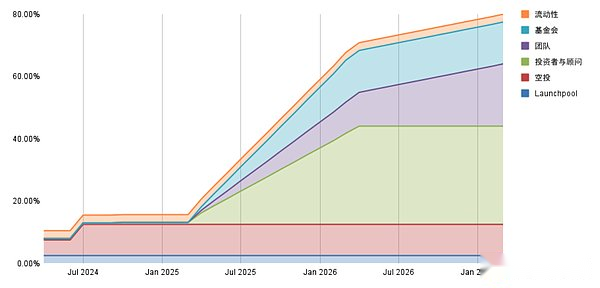
Initial circulation: 1,050,000,000 EZ (10.50%of the maximum supply of tokens)
-
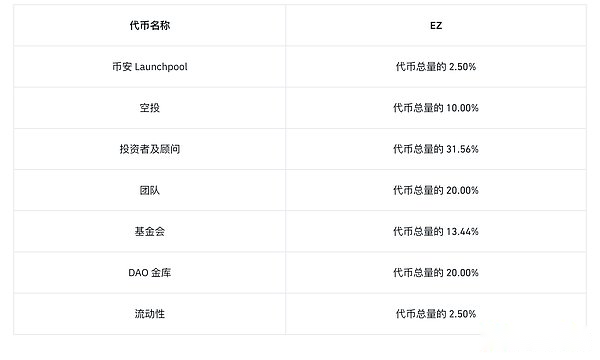
Total mining: 250,000,000 EZ (2.5%of the maximum supply of tokens)
Renzo (EZ)Brief introduction
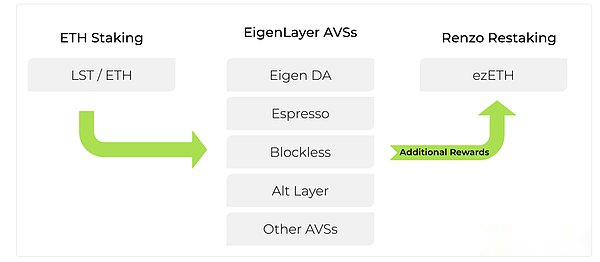
Renzo is the liquidity of Eigenlayer’s liquidity to reconnect token (LRT) and strategic manager.It is an interface of the EIGENLAYER ecosystem that protects active verification services (AVS) and provides higher returns than ETH pledge.
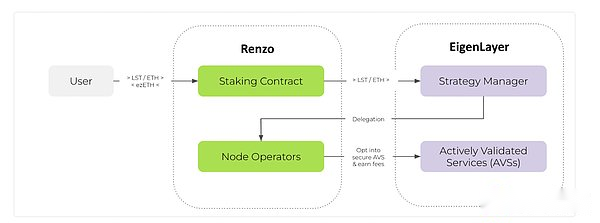
The agreement abstracts all the complexity of the end user and enables them to easily collaborate between them and Eigenlayer node operators.
Renzo vigorously advocates Eigenlayer and its goal of promoting innovation without permission on Ethereum, and obtains the trust of the ecosystem by programming.
How to run Renzo
Renzo is a flow derivative platform based on Eigenlayer.It acts as an interface for the Eigenlayer ecosystem by protecting the active verification service (AVS) and providing higher income than ETH pledge.
For each LST or ETH deposit in Renzo, it will cast an equal amount of EzetH.
>
Project mission
Renzo aims to be the main entrance/export of Ethereum to re -mortgage. The combination of smart contracts and operator nodes to ensure the best risk/reward re -mortgage strategy.The establishment of Renzo is to promote the extensive adoption of Eigenlayer.
>
Ecosystem
Eigenlayer has 4 main components in the ecosystem:
-
Active verification service (AVS): AVS in Eigenlayer is a decentralized service that will inherit the security of Ethereum via Eigenlayer.These services can support various networks, such as side chains, data layers, etc.EIGENLAYER enhances security by using the concentrated resources of Ethereum for middleware services, block construction and transaction sorting, and opens the door for innovation in the fields of MEV and PBS.
-
Ethereum pledker: Ethereum pledgers in EIGENLAYER can protect multiple networks by re -pledge their ETH.This means that they can use existing funds to support multiple networks through smart contracts.Although this provides additional benefits, if the pledgers fail to meet the conditions they choose to support the service settings, it will also bring a significant risk of cutting.
-
Node operator: Node operators in EIGENLAYER provide computing resources to run various services safely, including decentralized applications (DA), prophecy machines and network bridges.These operators can freely choose their services and implement AVS suggestions.
-
EIGENLAYER protocol: The EIGENLAYER protocol is composed of Ethereum smart contracts, which can promote equity holders, node operators and services without trust.These contracts allow users to re -mortgage their assets, entrust them to node operators, and interact with the service module on the chain.The business module presets the rewards and deduction conditions to ensure the smooth interaction between the operator and the business.
Project highlight
The EIGENLAYER ecosystem allows Ethereum verifications to re -mortgage its ETH and provide services to the network. For example, the data availability layer of specific types of node software, which is known as active verification service (AVS).
Eigenlayer Operator serves as AVS nodes and selects AVS by running its AVS software.The AVS node is a node running AVS software as EIGENLAYER Operator.
The Renzo operating node is a professional pledged provider, which can ensure that the capital security and the accuracy of the pledge operation belonging to the protocol user.
The protocol is distributed between all activity node operators based on the weight associated with each operator.In this way, you can set a certain risk/return to allow the best return of computing risks.
Token economics
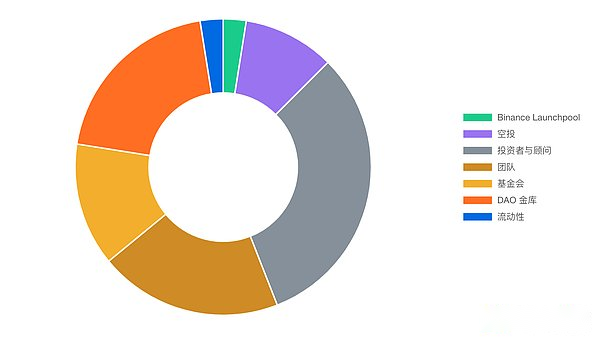
Token distribution
>
>
Token issuance timetable
>