 jakiro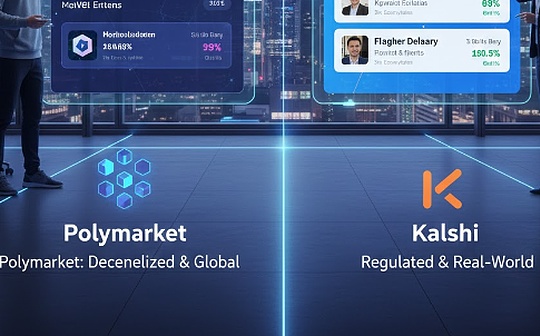
Written by: 0xjs
background
Polymarket is the world’s leading on-chain prediction market platform. Especially during the 2024 US election, transaction volume surged to billions of dollars, and it is regarded as the “wind vane” of the crypto prediction market.Kalshi is another prediction market platform that competes directly with Polymarket.
Paradigm is a top venture capital firm focusing on crypto investments. Its founder, Matt Huang, has been active on the X platform for a long time and often shares insights into the crypto ecosystem.Paradigm recently invested in Kalshi, setting the stage for subsequent controversy.
Origin of the event (December 8, 2025)
-
Bug found: Paradigm data analyst Storm discovered a problem with Polymarket’s on-chain data while conducting due diligence.Specifically, in Polymarket’s onchain transaction records, each transaction has “redundant representations”, causing third-party data aggregation tools (such as Dune, Artemis and other dashboards) to double count each transaction when calculating transaction volume.This is not wash trading or manipulation, this is a pure technical bug.Storm explained in detail in a post onStorm’s post quickly racked up 689 likes and 226,000+ views.
-
Matt Huang retweeted: Less than 15 minutes later, Matt Huang retweeted storm’s post with a brief comment: “Polymarket data bug: volumes are double-counted in most public data. Interesting find in diligence from @notnotstorm”.The repost went viral, with over 62k views on the post, sparking heated debate.
Polymarket responds
-
Primo Data (@primo_data), head of data at Polymarket, quickly responded to clarify the facts:
-
The Polymarket official website itself does not double-count trading volume. They display “nominal taker volume” (buyer’s notional value), which is consistent with traditional prediction market standards such as Kalshi.
-
Third-party dashboards (such as Artemis) also show the taker’s notational volume, without double issues; they even include screenshots to prove it.
-
This topic was discussed in the Encrypted Data group chat back in October, and Matt Huang also saw the response at the time but did not mention it publicly.
-
Primo Data emphasizes that this is not Polymarket’s fault, but a parsing problem for data aggregators.
Community and media reaction
-
Voices supporting Paradigm: Some users praised storm’s findings, believing that it exposed the hidden dangers of DeFi data integrity and was a useful reminder to the industry.
-
Questioning and FUD accusations:More controversy centers on “motivation.”Many users pointed out that Paradigm is an investor in Kalshi (it participated in the last three rounds of financing), and Huang’s retweet was regarded as “smearing competitors.”For example:
-
User @amathuxbt said: Is it all because Polymarket founder Shayne Coplan didn’t give Paradigm an investment opportunity?
-
@tier1haterr said: Kalshi calculates this way too, but because it is an investment project of Paradigm, it is exempt from review?
-
Other replies such as @andrewhong5297 stated that this is a “known issue” that was debated over a year ago and is similar to the standard settlement method of bid + ask in the market.
-
Wider discussion: The incident quickly trended, with some reports saying “some observers criticized Huang for trying to discredit his competitors.”At the same time, an independent study by Columbia University (released in November) also pointed out that there was a wash trading problem in the Polymarket sports market, further amplifying doubts about the reliability of the platform data, but Huang’s accusation clearly had nothing to do with wash trading.
Current Impact and Outlook
-
Data Correction: Several dashboards (such as Dune) have started investigating, and the query logic may need to be updated.Polymarket’s actual trading volume may be overestimated by 50%-100%, which will affect investors’ assessment of the size of the forecast market.
-
Industry Enlightenment: The incident highlights the difference between on-chain data vs. centralized platforms—Polymarket’s transparency is a double-edged sword, easy to misread, but also easy to audit.The Paradigm-Kalshi rivalry makes the matter more of an “industry infighting,” but it also drives discussions on data standards.
-
Latest developments (2025-12-09): Polymarket has not made any further official response, and Huang has not followed up.The community is obviously divided, but the overall situation has not led to a big crisis – the prediction market is still a hot spot in encryption, and the potential of Kalshi and Polymarket’s “civilization-level truth machine” has not changed.
All in all, it was a “minor incident” born of a technological discovery that quickly evolved into a competing narrative, but at its core was a reminder of data transparency.