 jakiro
Introduction
“As long as the code is decentralized enough, there will be no legal entity and supervision will be impossible.” – This was once the refuge that many on-chain lending entrepreneurs considered.They are trying to build an “algorithmic bank” without a CEO and a headquarters.
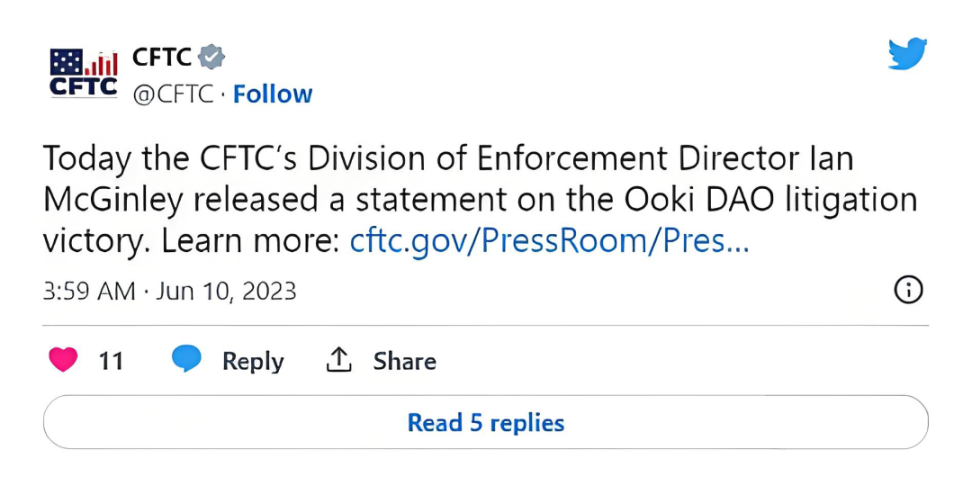
However, with the implementation of the penalties for the Ooki DAO case in the United States, this layer of “de-subjectification” invisibility cloak is being pierced by regulatory agencies.Under the stricter “penetrating supervision” logic, how far can on-chain lending go?
On-chain lending: Web3’s autonomous bank
On-chain lending can be understood as an automatic lending machine operated by no one. Its main functions include:
-
Automated pool: Lenders deposit money into a public pool managed by code and start earning interest immediately.
-
Over-collateralization: Borrowers must mortgage assets higher than the borrowed amount to control risks.
-
Algorithm-determined interest rate: The interest rate is automatically adjusted by the algorithm according to the supply and demand of funds, and is completely market-oriented.
This model eliminates the intermediary role of traditional banks and realizes a 24/7 global automated lending market. It does not require manual review and is automatically executed by code. It greatly improves the efficiency of fund use, releases asset liquidity, and provides a native source of leverage for the crypto market.
The ideal is full: Why do entrepreneurs pursue “de-subjectification”?
In traditional finance, banks and lending platforms have clear corporate entities, so you know who to call if there is a problem.However, the design of on-chain lending attempts to erase “who”. What it pursues is not simple anonymity, but a system architecture, which is mainly reflected in two aspects:
1. The opponent is code, not people
You no longer contract with any company or individual, but interact directly with a public, self-executing smart contract.All lending rules, such as interest rates and mortgage rates, are hard-coded.Your counterparty is this program.
2. Decision-making relies on the community, not management
The agreement has no board of directors and no CEO.Major upgrades or parameter adjustments are decided by voting by governance token holders distributed around the world.Power is diffused and thus responsibility is blurred.
For entrepreneurs, choosing “de-subjectification” is not only an ideal, but also a realistic survival strategy. The core purpose is to defend:
-
Defend against regulation: Traditional lending requires expensive financial licenses and compliance with strict rules.Positioning itself as a “technology developer” rather than a “financial institution” aims to bypass these barriers.
-
Defense liability: When an incident such as a hacker attack causes user losses, the team can claim that “the code is open source and the protocol is non-custodial” in an attempt to avoid liability like traditional platforms.
-
Defensive jurisdiction: There is no entity and servers are spread all over the world, making it difficult for any single country to shut it down easily.This “cannot be shut down” feature is its ultimate defense against geopolitical risks.
The reality is very skinny: Why does “code not guilty” work?
1. Regulatory risks:
Regulators are wary of on-chain lending due to three core risks that cannot be ignored:
1. Shadow banking:
On-chain lending is essentially the creation of credit, but it is completely outside the central bank and financial regulatory system. It is a typical shadow banking activity.Once a large-scale price drop occurs, it will trigger a chain of liquidations, causing systemic risks and impacting the entire financial system.
2. Illegal securities:
Users deposit assets into a fund pool to earn interest. This behavior, in the eyes of regulatory agencies such as the U.S. SEC, is very much like issuing an unregistered “security” to the public.As long as benefits are promised and provided, securities laws may be violated no matter how decentralized the technology is.
3. Money laundering risk:
-
The fund pool model is easily exploited by hackers: they deposit stolen “stolen money” as collateral, then lend clean stablecoins, cut off the tracking of the capital chain, and easily complete money laundering, which poses a direct threat to financial security.
-
Regulatory principles: Substance over form
Functional supervision: They don’t care whether you are a company or a code, they only care whether you are actually doing the bank’s job of absorbing deposits and lending.As long as you are doing financial business, you must accept financial supervision.
Penetrating law enforcement: If there is no clear legal entity to hold accountable, they will directly trace the developers and core governance token holders behind it.The Ooki DAO case is a precedent, and members who participated in governance voting were also held accountable.
To put it simply, “de-subjectification” only makes the system appear to be “unmanned driving”, but as long as it may endanger financial security or harm investors, the “traffic police” who supervises it will definitely issue a ticket and find ways to find the “car owner” hiding behind the scenes.
2. Cognitive misunderstandings:
Many entrepreneurs try to circumvent regulation in the following ways, but it turns out that these lines of defense are very fragile. The following 4 points are common misunderstandings:
Myth 1: DAO governance is exempt from liability: decisions are made by community votes, and the law does not hold the public accountable.
In the Ooki DAO case, token holders who participated in the vote were also identified as managers and punished.If the DAO is not registered, it may be regarded as a “general partnership”, and each member shall bear unlimited joint and several liability.
Misunderstanding 2: Only writing code but not operating it: I only developed open source smart contracts, and the front end was deployed by others.
Although EtherDelta is a decentralized exchange protocol, the SEC still found founder Zachary Coburn responsible for writing and deploying smart contracts and profiting from them, and was responsible for unregistered exchanges.
Misunderstanding 3: Anonymous deployment cannot be caught: the team identity is hidden, the server IP is hidden, and cannot be traced.
Absolute anonymity is almost a false proposition!The liquidation of funds on centralized exchanges, submission records of code libraries, and social media information may all expose your identity.
Myth 4: Offshore structures cannot be regulated: The company is in Seychelles, the server is in the cloud, and the US SEC has no jurisdiction.
The “long-arm jurisdiction” of the United States is very strong.As long as there is access by a U.S. user, or transactions involving U.S. dollar stablecoins, U.S. regulators may assert jurisdiction.BitMEX was heavily fined and the founder was sentenced.
The Entrepreneur’s Dilemma: The Realistic Challenge of Complete “De-Subjectivization”
When entrepreneurs choose to completely “de-subjectify” in order to avoid supervision, they face many obstacles:
1. Unable to sign a contract and difficult to cooperate
Code cannot be used as a legal subject to sign a contract.When it comes time to rent a server, hire an audit firm, or work with a market maker, no one can sign the agreement on your behalf.If the developer signs it personally, he will bear the responsibility; if he does not sign it, he will not be able to establish cooperation with formal large-scale institutions.
2. Unable to protect rights, code is copied at will
Web3 advocates open source, but this means that competitors can legally copy your code, interface, and even brand in full, with only minor modifications (i.e., “forking”).Since there is no legal subject, it is difficult for you to protect your intellectual property rights through lawsuits and other methods.
3. Without a bank account, financing and salary payment are hindered
DAO does not have a bank account, so it cannot directly receive legal currency investments, nor can it pay wages and social security contributions to employees.This not only greatly limits talent recruitment, but also hinders the entry of funds from traditional large investment institutions.
4. Slow decision-making and missed crisis management opportunities
Giving decision-making power entirely to the DAO community means that any important decision needs to go through a lengthy process of proposals, discussions, and voting.When encountering hacker attacks or violent market fluctuations, this “democratic process” may cause the project to miss the best response opportunity and be unable to compete with centralized opponents in terms of efficiency.
Compliance Path: How Entrepreneurs “Reconstruct the Subject”
Facing reality, top projects no longer pursue absolute de-subjectification, but have turned to a pragmatic “Code + Law” model. The core is to build a compliant “shell” for the agreement.
There are currently three mainstream compliance structures:
1. A two-tier architecture with layered development and governance:
Operating company: Register an ordinary software company in Singapore or Hong Kong, responsible for front-end development, recruitment and marketing.It calls itself a “technical service provider” and does not directly touch financial services.
Foundation: Set up a non-profit foundation in Cayman or Switzerland to manage the token vault and community voting.It serves as the legal incarnation of the agreement and bears ultimate responsibility.
2. DAO LLC:
Directly use the laws of Wyoming or the Marshall Islands to register the DAO itself as a new type of limited liability company.In this way, members’ liability is limited to the scope of their capital contributions, avoiding the risk of unlimited liability.
3. Compliance front-end and permissioned DeFi:
Although the underlying protocol cannot prevent anyone from using it, the official website operated by the project can screen users:
-
Geo-blocking: Block access from IPs from sanctioned or high-risk areas.
-
Address screening: Use professional tools to block known hacking and money laundering addresses.
-
Establish a KYC fund pool: cooperate with institutions to provide services to professional users who have completed identity authentication.
Conclusion: From “Code Utopia” to “New Compliance Infrastructure”
The next hot spot for on-chain lending is undoubtedly RWA, which introduces real-world assets (such as treasury bonds and real estate) onto the chain.To handle trillions of traditional funds, a clear legal entity and compliance structure are the ticket.
Compliance is not a betrayal of the original intention, but the only way for the Web3 project to go mainstream.The future of on-chain lending is not a choice between “decentralization or compliance”, but a dual-track integration of “code autonomy + legal subject”.