 jakiro
Author: Dilip Kumar Patairya, Source: Cointelegraph, Compiler: Shaw Bitcoin Vision
1. Inflation, macroeconomic cycles and the dual role of Bitcoin
Inflation is at the heart of the modern business cycle.When inflation is high, central banks raise interest rates, reduce liquidity, and steer investors toward safer assets.When inflation falls, liquidity typically improves, risk appetite returns, and markets begin to focus on future growth.
In this environment, Bitcoin plays two distinct roles:
-
A store of value backed by its fixed supply and predictable issuance schedule.
-
A high-risk technology asset that is highly susceptible to liquidity, market sentiment and broader risk cycles.
Periods of cooling inflation often mark when these two objectives are intertwined or conflicting with each other at different stages of the cycle.
2. Historical example: Bitcoin’s performance during past periods of cooling inflation
Analysis of historical market cycles helps reveal how falling inflation affects Bitcoin’s price and volatility.
2013-2015: Digital Gold Narrative
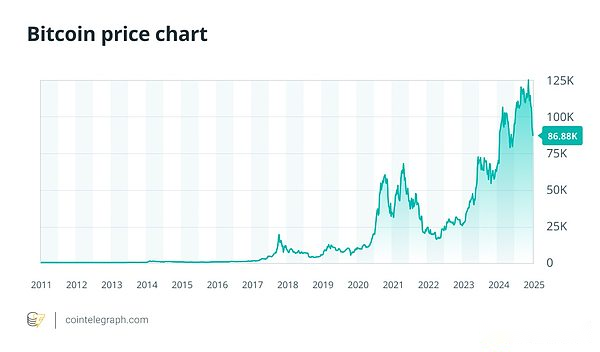
After the first major surge in Bitcoin prices in 2013, global inflation fell and risk appetite weakened.Cryptocurrencies have entered a lengthy period of consolidation.Investors are starting to view Bitcoin as a potential long-term store of value, similar to gold.Price action is slow, but its fundamentals are strengthening day by day.
Bitcoin price chart
2018-2019: Institutional engagement discussions
After peaking in 2017, inflation cooled and central banks tightened monetary policy.Bitcoin remained range-bound for most of 2018 and 2019, but some important developments occurred along the way:
-
U.S. financial institutions are beginning to study Bitcoin as a non-correlated portfolio hedging tool.
-
Custody services and futures markets have been launched.
-
The “store of value” theory is gradually gaining recognition.Cooling inflation did not trigger an immediate market rebound, but it set the stage for future institutional adoption.
2022-2024: Bitcoin becomes a macro asset
Inflation reached a 41-year high in 2022, then fell back in 2023-2024, and Bitcoin entered the next stage:
-
Bitcoin no longer functions as a hedge against inflation.
-
It becomes more sensitive to liquidity and interest rate expectations.
-
Exchange-traded funds (ETFs), institutional flows, and the tokenization narrative continue to expand.
As inflation falls and risk appetite improves, Bitcoin transforms from a crisis hedge to a growth-oriented asset.
3. How cooling inflation affects Bitcoin trends
There is a complex relationship between falling inflation and Bitcoin’s movements.Changes in the macroeconomic environment can affect its perceived value and role as a digital asset.
-
From inflation hedging tools to beneficiaries of loose monetary policy: When inflation falls, the urgent need for hedging tools disappears as well.Investors are instead favoring assets that perform well in loose monetary conditions.Bitcoin typically trades when central banks signal pause or rate cuts, real yields peak and markets anticipate increased liquidity, the performance is stronger.
-
Refocus on its store-of-value properties: Lower inflation brings longer-term economic stability and reminds investors of Bitcoin’s fixed supply plan.
-
The return of speculation and retail participation: Falling inflation has shifted market sentiment from fear to speculation, leading to higher leverage, increased altcoin trading activity, and larger retail trading volumes.
-
Increased institutional commitment: As macro uncertainty decreases, institutions are more willing to add Bitcoin to their investment portfolios, thereby increasing ETF inflows and balance sheet holdings.
4. Typical price patterns during periods of cooling inflation
Analysis of Bitcoin price trends during periods of cooling inflation shows that its history is complex, with prices fluctuating rapidly due to various macro and microeconomic factors.
During its cycle, Bitcoin exhibits four typical behaviors:
-
Early in the cooling phase, market volatility increases as markets debate whether policy changes will occur.
-
Once the possibility of a rate cut or pause in interest rate increases increases, the market may see a strong and sustained rise.
-
The correlation with technology stocks was high initially, but then declined as market conditions stabilized.
-
Price reversals and new upward trends often begin before inflation reaches its lowest point.
Cooling inflation typically creates favorable conditions for Bitcoin:
-
Reduce the discount rate and increase the present value of scarce long-term assets
-
Improve overall liquidity and make risky assets more attractive.
-
Reduce economic uncertainty and enhance long-term confidence
-
In some cycles, falling inflation coincides with stabilizing energy costs, which benefits miners.
-
Encourage institutional investment by removing major macroeconomic barriers.
Historically, the combination of these factors has tended to coincide with periods of strong market performance.
5. Inflation cooling: Why Bitcoin’s “safety signal” is a trap
Cooling inflation is not a reliable signal of continued economic strength, and past cycles have shown that a correction in economic policy is still possible.
Past cycles have shown:
-
Too optimistic about imminent rate cut
-
After a temporary decline, inflation will rise again
-
Sudden risk avoidance events
-
Unexpected regulatory measures that could offset positive macro trends.
You also need to consider that different Bitcoin cycles may follow different paths and be driven by different factors.For example, the current inflation cooling cycle is different from previous cycles for the following reasons:
-
Spot Bitcoin ETFs have emerged and generated institutional demand.
-
Tokenization and stablecoins have reached a higher stage of development.
-
Bitcoin’s scarcity narrative has become a big part of its appeal.
-
Investors have a better understanding than ever of how Bitcoin reacts relative to liquidity conditions.
Lower inflation could reinforce Bitcoin’s dual role as a store of value and macroeconomically sensitive asset, and could lead to a more robust market.