
 jakiro
Long Yue, Wall Street Insights
As the world’s largest listed company holding Bitcoin, MicroStrategy announced on Monday, December 1, that it had raised funds through the sale of shares and established a “USD reserve” worth $1.44 billion.
The move is aimed at countering wild swings in the cryptocurrency market and providing protection for the payment of dividends and interest on debt.Previously, Bitcoin prices had fallen from a high of over $126,000 in early October to about $85,000 in just over a month.
The company executive said,If “mNAV,” its measure of enterprise value versus cryptocurrency holdings, falls below 1 and the company is unable to raise capital through other means, Bitcoin will be sold to replenish U.S. dollar reserves.The statement was seen as a major turning point in the company’s strategy, breaking the “always buy and hold” philosophy long advocated by its founder, Michael Saylor.
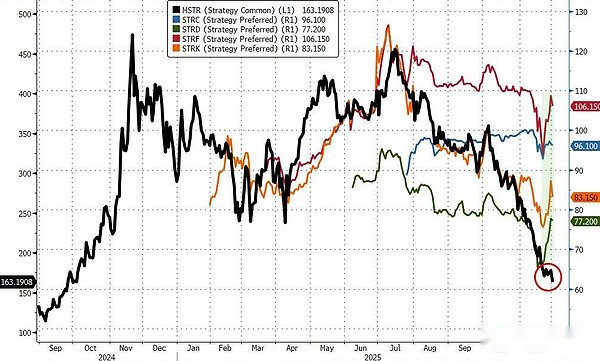
As the company hinted at the possibility of selling Bitcoin for the first time, its shares plunged as much as 12.2% during trading on Monday, before closing down 3.3%.The investor sell-off reflects deep doubts about the sustainability of its business model during the “Bitcoin Winter.”
USD Reserves: Insurance Against a “Bitcoin Winter”
Facing headwinds in the crypto market, MicroStrategy is taking steps to strengthen its financial position.The $1.44 billion reserve was funded by proceeds from the company’s stock sales, according to media reports including the Financial Times.The company aims to maintain U.S. dollar reserves sufficient to cover dividends for “at least 12 months” and eventually expand to cover “24 months or more.”
The funds, reportedly raised through an issuance of 8.2 million shares last week, are enough to cover the company’s entire interest expense for the next 21 months.Currently, MicroStrategy pays about $800 million in interest and preferred stock dividends annually.The move is intended to ensure that companies are not forced to sell Bitcoin in the short term even if capital markets lose interest in their stocks and bonds.
Company CEO Phong Le admitted in a recent podcast “What Bitcoin Did”,The move is preparation for the “Bitcoin winter”.Company founder Michael Saylor said the reserve will “allow us to better navigate short-term market fluctuations.”
The “never sell” myth busted?
The core change in this strategic adjustment is that MicroStrategy admitted for the first time the possibility of selling Bitcoin.This potential sell condition is tied to the company’s in-house “mNAV” metric, which compares a company’s enterprise value (market cap plus debt minus cash) to the value of its cryptocurrency holdings.
CEO Phong Le made it clear:“I hope our mNAV doesn’t go below 1. But if we do get to that point and there are no other sources of financing, we will sell Bitcoin.”
This statement is of great significance.Michael Saylor has long been a staunch evangelist for Bitcoin, transforming MicroStrategy from a small software company into the world’s largest corporate holder of Bitcoin. His core strategy is to keep buying and holding for the long term.
Currently, the company holds approximately 650,000 Bitcoins, worth approximately $56 billion, accounting for 3.1% of the total global Bitcoin supply.Its enterprise value is approximately $67 billion.Once mNAV falls below 1, it means that the company’s market valuation (after excluding debt) is lower than the value of its Bitcoin holdings, which will seriously shake the foundation of its business model.
looming debt pressure
Behind the establishment of US dollar reserves is the huge debt pressure faced by MicroStrategy.The company finances the purchase of Bitcoin through a variety of methods, including issuing stocks, convertible bonds and preferred shares, and is currently carrying $8.2 billion worth of convertible bonds.
If the company’s stock price continues to be depressed, holders of these bonds will choose to require the company to repay the principal in cash rather than convert it into shares, which will put huge cash flow pressure on the company.When rating agency S&P Global gave MicroStrategy a “B-” credit rating on October 27, it specifically pointed out the “liquidity risk” posed by its convertible bonds.
S&P warned: “We believe there is a risk that the company’s convertible debt will mature at the same time at a time when Bitcoin prices are under severe pressure, which could lead to the company liquidating its Bitcoin when prices are depressed, or engaging in a debt restructuring that we may view as a default.”
Concrete pressure is at hand.Information shows that holders of a bond worth US$1.01 billion can require the company to repay the principal on September 15, 2027.In addition, there are more than 5.6 billion US dollars of “out-of-the-money” convertible bonds that may need to be redeemed with cash in 2028, which poses hidden dangers to the company’s long-term financial stability.
Trader’s Interpretation: Is it prudent risk aversion or a “prelude to selling”?
Although MicroStrategy CEO’s remarks emphasized that Bitcoin will only be sold under extreme conditions, traders have clearly begun to “over-interpret” in a sensitive market environment.
While the company insists its long-term accumulation strategy remains intact, traders are concerned that the latest comments introduce a potential selling path.This concern quickly translated into action, leading to rising risk aversion.
Regarding CEO Phong Le’s mention that “when the stock price is lower than the value of the underlying asset and financing is limited, it is mathematically reasonable to sell Bitcoin”, the market reaction was polarized:
The pessimist reads the “overtone”:Many cryptocurrency traders speculated that the seemingly flippant comments could be a sign that the world’s largest corporate holder is preparing to sell off some of its bitcoin.”Can’t wait to see them sell at the bottom,” one user quipped on social media
Rationalists believe this is an inevitable move: Others believe that CEO Phong Le is simply acknowledging the constraints faced by any listed company when its market value is lower than its asset value.”The point is not that they might sell, but how committed they are before that option becomes a reality,” one investor noted.
In order to appease the market, MicroStrategy later said on theFounder Michael Saylor also continued to show confidence, announcing on Monday that the company had purchased another 130 BTC for $11.7 million.
Market reaction and performance warning
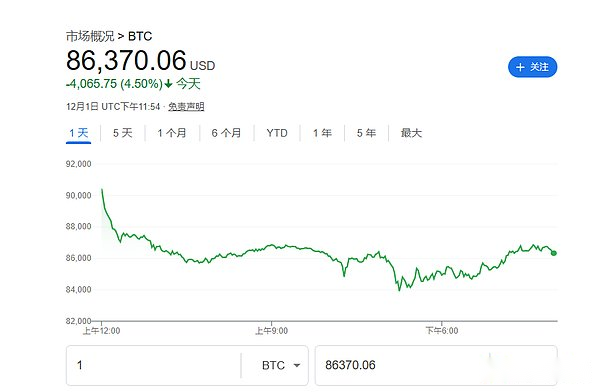
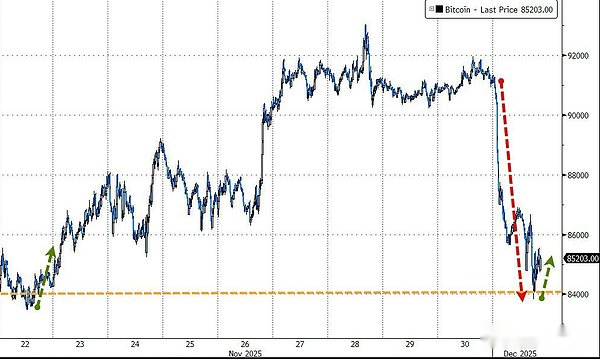
MicroStrategy’s latest trends and the concerns it caused about strategic changes quickly triggered a negative reaction in the market.Its shares hit an intraday low of $156 on Monday, and although they recovered somewhat at the close, they are still down 64% from their 52-week high in mid-July.The stock has fallen nearly 41% this year.At the same time, the price of Bitcoin was not spared, falling more than 4% to about $86,370.
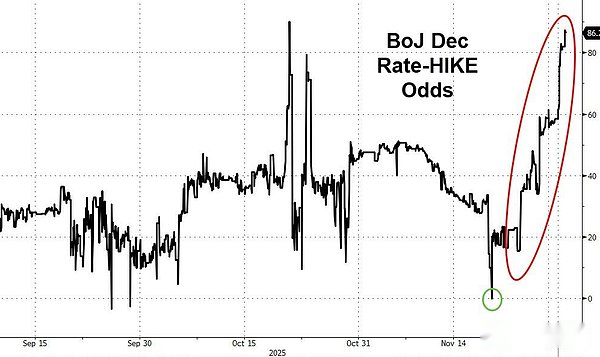
In addition to the company’s own strategic adjustments, the violent fluctuations in the macro market have also become the “last straw” that crushes the stock price.The market showed a clear risk-off tone on Monday, stemming from the yen financing squeeze triggered by the Bank of Japan’s hawkish stance on the one hand, and the turmoil in the cryptocurrency field itself on the other.
Related chart data shows the current extreme sentiment in the market:
-
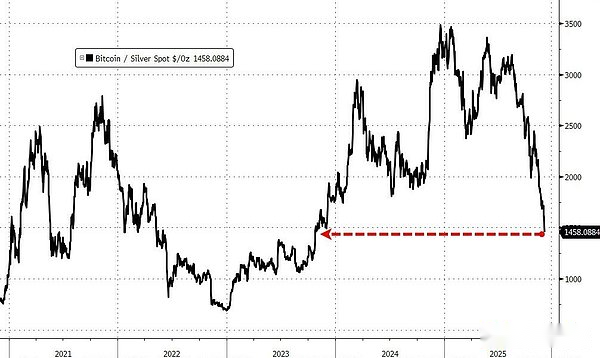
The purchasing power of Bitcoin has shrunk: A year ago, one Bitcoin could buy 3,500 ounces of silver; today, the same unit of Bitcoin can only buy 1,450 ounces of silver, hitting the lowest point since October 2023.The sharp decline in this ratio visually reflects the weakness of crypto assets relative to traditional safe-haven assets such as silver.
-
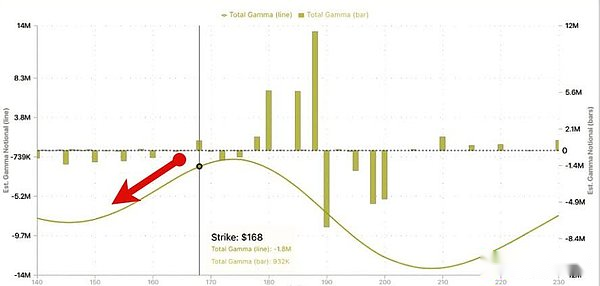
Options market sniping: Data from SpotGamma points out that MicroStrategy (MSTR) faces a typical “over-leveraged target under attack” situation.A large number of put options (Long Puts) are clustered below $170.This negative Gamma effect means that if the price of Bitcoin falls further, the hedging behavior of market makers may accelerate the decline of crypto-concept stocks such as MSTR and Coinbase, and even drag down major stock indexes.
-
Macro headwinds: As expectations for a rate hike by the Bank of Japan heat up, carry trade is facing pressure to liquidate positions. As the most speculative asset class, cryptocurrency is the first to bear the brunt.Bitcoin once found support near US$84,000 during the day and suffered its worst single-day performance since March 3; Ethereum even fell below the US$3,000 mark.
In addition to the pressure on the stock price, the company’s performance expectations have also turned red.MicroStrategy predicts that if the price of Bitcoin closes between US$85,000 and US$110,000 at the end of this year, the company’s full-year performance may range from a net loss of US$5.5 billion to a net profit of US$6.3 billion.This is in sharp contrast to the company’s forecast of “a net profit of US$24 billion in 2025” in its financial report released on October 30.