 jakiro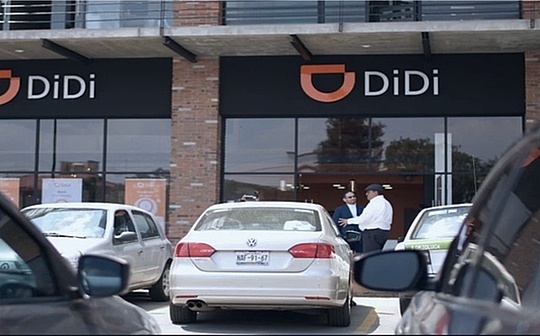
Author: Sleepy.txt
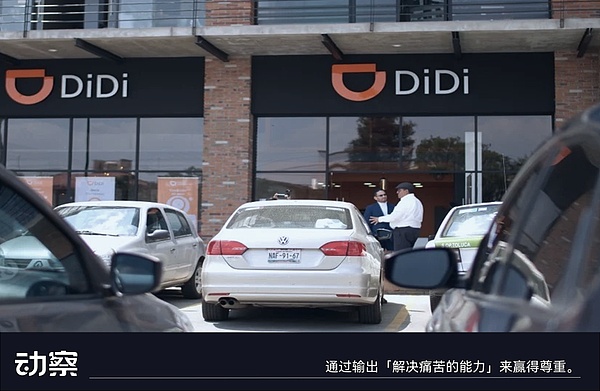
On the other side of the world, Didi is no longer just an online ride-hailing company that earns commissions, but has become a digital banking giant.The financial business, once considered an add-on to ride-hailing services, now has more than 25 million users in Latin America.
If we focus on China, Didi’s face is clear and solid. Although it has hundreds of millions of monthly active users, it has always been an embarrassing outsider in the more fertile financial landscape and in front of the iron walls built by WeChat Pay and Alipay, and can only guard the three-thirds of an acre of travel.
However, in the noisy streets of Mexico City and in the congested traffic of Sao Paulo, thousands of people who have never stepped through the door of a bank are holding the first Mastercard in their hands, with Didi’s logo clearly printed on it.
Here, it is the driver who takes people home, and it is the bookmaker that truly controls the flow of underlying funds. It is the “money bag” that countless ordinary people in Latin America rely on to survive.
Looking back at Didi’s rise in Latin America, this is not only a geographical expansion, but more like a “reverse evolution” forced by the environment.
In China, because the roads had been built by others, Didi only had to be a driver; but in Latin America, faced with a wasteland, it was forced to learn how to pave roads and build bridges.This ability to build infrastructure is what Chinese Internet companies were best at in their early years, but were gradually forgotten due to the over-perfection of domestic infrastructure.
Ambition stifled by “perfection”
Didi’s failure in China’s financial battlefield was not because it did anything wrong, but because it was born in an era that was too mature and the infrastructure of this market had been built too perfectly.Perfection is sometimes a curse.
In the grand narrative of China’s Internet business history, 2016 is a watershed.That year, with the conquest of WeChat Pay and Alipay, China’s mobile payment war was effectively over.Together, the duopoly accounts for more than 90% of the market, turning mobile payments into national infrastructure as accessible as water, electricity and coal.
For consumers, this is the ultimate convenience; but for latecomers like Didi, this is an invisible high wall.
In the following years, Didi worked hard to collect 8 financial licenses including payment, online small loans, and consumer finance, trying to build its own closed loop.When the duopoly has become the underlying operating system of the business world, other payment tools are destined to be functional plug-ins attached to this system.
The deeper paradox is that traffic is never naturally equivalent to “retention”.
Although Didi has a huge passenger flow, there is a fatal genetic flaw in the travel scene-short stay and no precipitation.In the extreme payment environment created by the duopoly, funds are withdrawn from the user’s bank card, entered into the driver’s account, and then quickly withdrawn.
In this process, Didi is just an efficient pipeline, not a reservoir of funds.Compared with the capital accumulation generated by Alibaba’s e-commerce transactions and the capital flow generated by Tencent’s social red envelopes, Didi’s traffic is “use and go”.
This sense of suffocation finally reached its peak in the drastic changes in the regulatory environment.
The delisting crisis in the summer of 2021 and the subsequent huge fine of 8 billion, like heavy rests, completely ended Didi’s domestic financial ambitions.Under such a high-pressure situation, Didi not only missed the time window for expansion, but also lost room for strategic maneuvering.It can only be forced to shrink and survive cautiously.
At this point, Didi’s financial story in China seems to have come to an end.
It is trapped in the siege of “perfection”.The road is too smooth and does not need to be repaired; the bridge is too stable and does not need to be erected.
This seems to be an unsolvable dead end.But across the Pacific, a completely opposite business script is playing out.The desolation there not only did not become an obstacle, but instead became the biggest bonus in Didi’s hands.
Rebuilding trust in the land of cash
When Didi’s advance troops set foot on the Latin American continent for the first time, what they saw was not a blue ocean to be developed, but a huge social fault.
According to the World Bank, about half of adults in Latin America do not have a bank account.In Mexico, a country with a population of 130 million, this means that more than 66 million ordinary people are blocked from the high walls of the modern financial system.
This is a suffocating “financial vacuum.”In this vacuum, cash is the only faith.
In Mexico, nearly 90% of retail transactions are still completed in cash.For Chinese Internet companies accustomed to a cashless society, this “cash worship” is simply a nightmare.In China, funds flow in the cloud, cleanly and efficiently; but in Latin America, because the vast majority of passengers do not have bank cards, they can only pay for their fares with crumpled, even sweat-stained banknotes.
This directly leads to the collapse of efficiency.The driver collected a pocketful of change, but the Didi platform was unable to take a commission from it. A large number of drivers had their accounts blocked due to non-payment, and the system was almost paralyzed.
But what’s more terrifying than efficiency is out-of-control safety.
On the streets of Latin America, where security is complicated, drivers carrying large amounts of cash have become mobile “cash machines.”Robbery cases follow closely, and every time you stop to collect money, it may be a gamble of life and death.
Here, we must introduce the most important frame of reference: Uber.
As the originator of online ride-hailing, Uber entered Latin America earlier than Didi.But faced with the same cash problem, Uber’s choice reflects the fundamental differences in the strategic genes of Eastern and Western Internet giants.
Uber represents a typical “Silicon Valley-style mysophobia” and professional division of labor.In the mature U.S. market, finance belongs to Wall Street, and Uber only makes connections.This kind of thinking has led them to arrogantly insist on doing only what they are good at when faced with the desolation of Latin America.
The price is heavy.In 2016, Uber learned a literal “bloody lesson” in Brazil, where the number of robberies against drivers soared tenfold in just one month after it was forced to accept cash payments, killing at least six drivers, according to Reuters.
Faced with this sharply increased risk of death, Silicon Valley’s choice is usually to retreat and wait for the environment to mature.
And Didi represents China and even Asia’s super APP thinking: all-round filling.
Enterprises that grew up in China’s brutal business street wars know one truth: if the society lacks roads, you have to build roads; if the society lacks credit, you have to create credit.
Therefore, Didi chose a heavier, earthier, but more effective path and decided to transform the environment.
Didi turned its attention to the red and yellow signs that can be seen everywhere on the streets of Mexico – OXXO convenience stores.
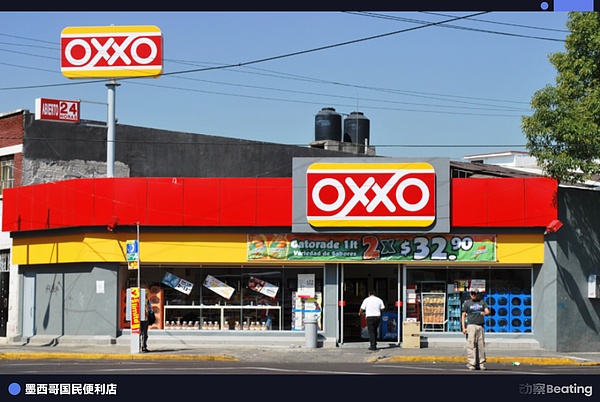
This retail giant with 24,000 stores handles nearly half of all cash transactions in Mexico and is the de facto “national cashier.”Didi keenly captured this connection point and made a very Chinese pragmatic decision: turning convenience stores into its own artificial ATMs.
A quiet financial experiment began.
When a driver ends a long day on the road, his pockets are stuffed with cash.He no longer needs to worry about taking money home. Instead, he parks his car in front of OXXO, shows the barcode in the DiDi App to the clerk, and hands over the cash.
With the crisp sound of the code scanning gun, the banknotes in the physical world instantly turned into the digital balance in the DiDi Pay account.
This crisp sound is of great significance.
This is not just a recharge, but a transfer of offline cash to online.By relying on the ubiquitous convenience store network, Didi has established a capital circulation system independent of traditional banks at low cost.
Once funds enter DiDi Pay, Didi is no longer just a travel platform, it has become a “shadow bank” for drivers.
Subsequently, Didi quickly built application scenarios on this account.In Brazil, 99Pay, owned by Didi, has deeply integrated with the local instant payment system PIX, allowing tens of millions of people at the bottom to enjoy the financial dignity of receiving their money in seconds for the first time.
This approach creates a bloody moat: security.
In China, mobile payment is for “speed”; but in Latin America, where security is complicated, mobile payment is for “living”.
Every attempt to go cashless means one less time a driver is at risk of being robbed at gunpoint.When a driver discovers that using DiDi Pay frees him from fear, his loyalty to the platform will transcend all commercial subsidies.
At this point, Didi finally built its first highway in Latin America.It solves not a need for bells and whistles, but the continent’s deepest desires – to make money flow and transactions secure.
When footprints become credit
After the road was built, Didi suddenly discovered that what he was stepping on was a gold mine that had never been mined before.The name of this gold mine is data.
But the data here does not refer to traditional financial flows.In Mexico or Brazil, the vast majority of drivers and passengers have a blank slate in the records of traditional financial institutions.The bank cannot see them and does not know whether they have the ability to repay, so they naturally dare not lend them money.
The bank cannot see it, but Didi can.
Through the App, Didi has a nearly omniscient “God’s perspective.”It clearly knows what time a driver leaves the car every day, how many kilometers he has traveled, and whether he is diligent; it also knows where a passenger lives, where he works, and how often he consumes.
These seemingly trivial travel footprints have been recoded by Didi’s risk control model and transformed into a new credit category – “behavioral credit.”
This is a warmer assessment than bank water.A driver who drives out on time at six o’clock every morning, rain or shine, even if he does not have bank deposits due to various reasons, according to Didi’s algorithmic logic, he is still a high-quality customer with extremely high credit.Diligence, here for the first time, is priced as credit.
Based on this endogenous credit creation, Didi naturally launched the lending product “DiDi Préstamos”.For millions of Latin American users, this may be the first time in their lives that they have access to formal financial credit.Data shows that about 70% of Didi’s credit users have never borrowed a penny before.
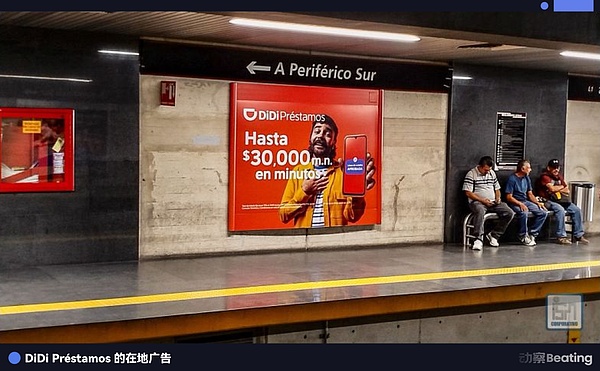
This is not only a commercial breakthrough, but also a sociological experiment with profound meaning.
In Latin America, the huge “grey economy” population has been invisible for a long time due to lack of credit history.Didi inadvertently completed a “digital rights confirmation” that the government has not been able to achieve for decades.A hawker selling tacos on the street, or a driver driving a second-hand car, has a recordable economic identity for the first time because he is connected to Didi’s ecosystem, and for the first time he has walked from the underground to the sunshine.
This ability to “formalize the informal economy” is the soil where Didi has taken deepest roots in Latin America.
The moat brought about by this evolution is amazing, and it has even triggered a war on “genes” in Latin America.
The digital financial battlefield in Latin America is already crowded with players, including digital banking giants like Nubank and e-commerce overlords like Mercado Libre.But Didi has a dimensionality reduction advantage that none of them have: extremely high-frequency life scenes.
Nubank’s DNA is banking, which is low-frequency; Meikeduo’s DNA is e-commerce, which is medium-frequency.Didi’s gene is travel, which is high-frequency.
You may only shop online once a month and go to the bank only a few times a year, but you still have to go out every day.When it comes to developing payment habits, “travel” is the highest-dimensional battlefield.Didi used high-frequency travel and takeout scenarios (DiDi Food) to successfully break through low-frequency financial service barriers.
With traffic, there must be “retention”.
In order to completely cut off the rapid flow of funds on the platform, Didi resorted to its final killer weapon: taking advantage of the high interest rate environment in Latin America to launch an interest rate war.
It launched “DiDi Cuenta”, a savings product with an annualized return of up to 15%.This is a number that sounds almost crazy in China and may even be suspected of being a Ponzi scheme.But in Mexico, where the benchmark interest rate remains at double digits all year round, this is just a routine battle waged by major digital banks to compete for deposits.
Didi just followed the locals, but it completed the most critical turning point. It finally got rid of the embarrassing role of “passing god of wealth” and truly turned into a capital reservoir that can accumulate wealth.
Industrial collaboration
Once the credit system and capital pool are formed, Didi’s ambitions are no longer limited to finance itself.
It has begun to play a more strategic role: a “Trojan horse” for Chinese industries to go overseas.It wants to use finance as the key to open the door to asset-heavy consumption in Latin America.
The first wave is the export of consumer goods overseas.
In 2025, AliExpress, a subsidiary of Alibaba, reached a cooperation with Didi in Mexico to launch a “buy now, pay later” service.The results were immediate, with AliExpress order volume soaring by 300% during the promotion week, and sales for some Chinese merchants even soaring 18 times.
For those young Mexicans who do not have credit cards, the credit payment provided by Didi has become their bridge to “Made in China”.
But this is just the prelude.A more far-reaching layout occurs in China’s overseas expansion of high-end manufacturing, especially new energy vehicles.
Today, Latin America has become a new battlefield for Chinese car companies such as BYD, Chery, and Great Wall.However, the biggest obstacle facing them is not product strength, but the lack of financial instruments.Local drivers want to buy electric cars to save money on gas, but traditional banks in Latin America not only approve loans extremely slowly, but also often refuse loans directly because of the failure of their risk control models.
At this time, Didi became the key connector.
Didi’s left hand holds millions of drivers who need to change cars, and its right hand holds accurate risk control data and credit funds. In the middle, it connects Chinese car companies that are in urgent need of opening up the market.It not only issues credit cards to drivers, but also directly plays the role of an automobile financial service provider.
Through Didi’s financial plan, drivers can purchase Chinese-made electric vehicles in installments and use the proceeds from the sports cars to repay the loan.
This is an extremely deep industrial collaboration.Didi is becoming the infrastructure for China’s high-end manufacturing in Latin America.It is not only paving the way for finance, but also paving the way for energy transformation.
At this point, a complete closed loop finally emerged.
In Latin America, Didi has turned itself into a super interface that connects online and offline, and connects Chinese manufacturing and Latin American consumption.
Its dream of a “super APP” that could not be realized in China due to the mature environment has miraculously become a reality in the wasteland on the other side of the earth in the most primitive but also the hardest way.
builder’s instinct
With 1.162 billion orders in a single quarter, a revenue growth rate of 35%, and a transaction volume approaching 30 billion, Didi used this heavy financial report to set a new roadmap for China’s Internet to go global.
This report card not only means commercial success, but also a revision of the logic of “China’s model going overseas”.
In the past, we often believed that relying on generational differences in technology and efficiency, China’s mature Internet model could be directly transferred to emerging markets.But Didi’s practice in Latin America has proven that simple copying is a dead end.You can’t just bring advanced machines over, you also have to do the dirty work that was done when the machines were built back then.
The most critical thing Didi did right in Latin America was to completely let go of the arrogance of technology companies.It crouched down and went back to ten years ago, re-doing the code scanning promotion and cash promotion that Alipay and WeChat Pay had done in a foreign country.
In the past, we often thought that the advantages of the Chinese model lay in algorithms and efficiency.But Didi’s story shows that the most terrifying ability of Chinese enterprises is the construction instinct of “making something out of nothing” in an environment of scarcity.
In China, this instinct has been blocked due to over-improvement of infrastructure.Didi is trapped between WeChat and Alipay and can only be an efficient dispatcher.
But in Latin America, when it was thrown into a wilderness, this suppressed gene completed an amazing explosion.It does not regard itself as a superior technology company, but as the simplest “infrastructure foreman”.
This also indicates a certain destiny and opportunity for Chinese companies to go overseas. Trying to directly transplant the domestic “perfect model” will not work. We can only win respect by exporting “the ability to solve pain”.
In those emerging markets that are as noisy, chaotic but full of desire as China was ten years ago, there are hidden the biggest easter eggs in the second half of China’s Internet.