 jakiro
Author: Maartje Bus @ The Medici Network, Source: Messari 2026 Crypto Thesis; Compiled by: Bitchain Vision
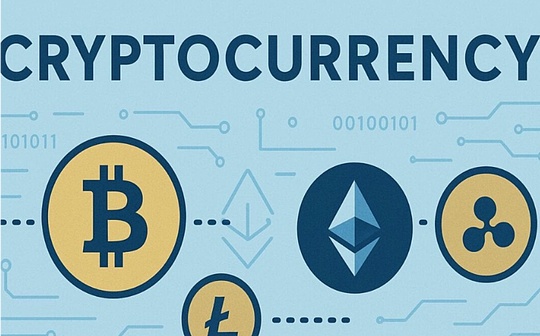
For many years, we have considered cryptocurrencies as a single asset class because its past market performance has certainly fit this profile.But today, that label is misleading.
The era of great differentiation is coming
Cryptocurrency is gradually getting rid of its positioning as a “single asset class”. The core reason is that the price trends of various asset classes within it are no longer converging, and the risk-return characteristics are no longer unified – these two points are the core elements that define an asset class.
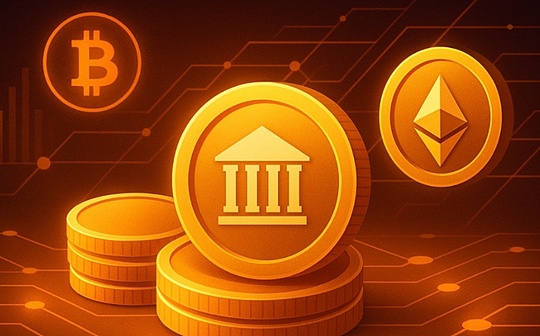
Bitcoin’s current performance is closer to a macro value storage tool:Its volatility has experienced a structural decline, institutional participation continues to deepen, and the linkage between price movements and other cryptocurrencies continues to weaken.
In contrast, Ethereum, mainstream public chains, and second-tier network ecology are more like high-growth technology infrastructure targets., its value performance is directly linked to the implementation of ecological applications, fee income, and application layer activity, rather than being subject to overall market sentiment.
Pragmatism transcends ideology
In addition to market performance, this differentiation reflects deeper structural changes.
The core underlying technologies of blockchain and cryptocurrency are gradually losing their ideological halo as “replacements to the existing financial system” and are instead being defined as infrastructure that reconstructs financial services and empowers new digital native applications.
The early concept of “decentralization” as the ultimate goal is giving way to a more pragmatic development orientation – focusing on practicality, reliability and cross-system compatibility.
Stablecoin is the most intuitive manifestation of this transformation: it is widely used, deeply integrated into the existing financial circulation system, and has basically achieved “no impact” on the technical level for end users.
More and more crypto-native functions (including lending, clearing and settlement, liquidity supply, etc.) are no longer facing users in the form of independent decentralized products, but as underlying modules, embedded in centralized or regulated application systems.
Cryptocurrency: A new entrant on the technology circuit
If Bitcoin, which has become its own group, is excluded, other sectors of the cryptocurrency industry no longer look like a single asset class, whether from an economic logic or an investment perspective, but are closer to the technology industry track – which is very similar to the development path of the Internet industry.
The core link that maintains these sectors is no longer convergent price fluctuations, but shared infrastructure such as blockchain, wallets, middleware, and decentralized finance underlying protocols.
Value creation and investment opportunities are also distributed at multiple levels of the industry, and can be realized through various forms such as tokens, publicly listed stocks, derivatives, credit products, structured instruments, etc., rather than being limited to a single, homogeneous transaction target.
future outlook
This transformation process is expected to accelerate further in 2026.
Blockchain infrastructure is accelerating to be embedded in real-life financial application scenarios, rather than being limited to independent decentralized products – stablecoins have taken the lead, followed by payment, lending, clearing and settlement and other fields.
The trend of asset tokenization will continue to promote the on-chain of traditional assets, thus blurring the traditional boundaries of various assets.
The IPO (initial public offering) reserve projects of crypto-native companies are increasingly abundant, which will further broaden the scope of investment targets; at the same time, financial super applications built on digital wallets and blockchain underlying networks are gradually taking shape – such applications integrate cross-asset brokerage, payment, credit and other services into a single interface to achieve one-stop services.
As cryptocurrency gradually grows into a fundamental infrastructure in the financial sector, the characteristics that once defined its industry attributes (such as meme-driven industry narratives, ideological-prioritized application design logic, and synchronized boom-and-bust cycles) will no longer occupy a central position.
Capital and R&D resources will increasingly be concentrated on products that have clear economic value and can create tangible benefits for users, rather than flowing to applications that are simply decentralized for the sake of decentralization and de-tokenized for the sake of tokenization.
Conclusion
The core significance of this change is that it completely restructures the definition of “cryptocurrency suitable”.
The popularity of cryptocurrency no longer relies on users actively purchasing tokens or deliberately “using crypto products”, but depends on whether the blockchain infrastructure can become the core anchoring layer for value transfer – currently using stablecoins as a carrier, in the future it will carry an increasingly rich set of tokenized assets.
Although these assets will increasingly be migrated to the chain, user access and interaction will be completed through wallets and various platforms.The underlying technical complexity of blockchain will be completely shielded.
In this way, even if cryptocurrencies gradually fade out of public view, the scale and economic influence of on-chain activities will continue to expand——This is the core symbol of the evolution of cryptocurrency from a transactional asset class to the underlying technology track.