 jakiro
Shaw, Bitcoin Vision
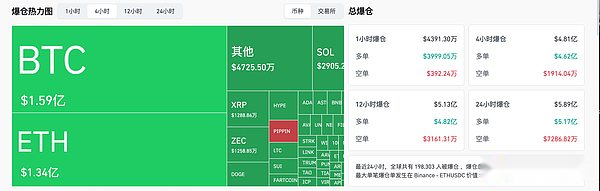
On the morning of December 1, cryptocurrencies once again experienced a “flash crash”. Bitcoin dropped by more than $4,000 in two hours, once touching $86,161, a 24-hour drop of nearly 5%; Ethereum dropped by more than $200 in two hours, once touching $2,813.20, with a 24-hour drop of more than 5.5%.Data shows that in the past 4 hours, the entire network has liquidated positions of US$481 million, including US$462 million of long orders and US$19.1404 million of short orders, with the main liquidation of long orders.The liquidation of BTC was US$159 million, and the liquidation of ETH was US$134 million.
At the beginning of December, the cryptocurrency market gave investors a blow, and the panic that had eased slightly before spread again.What happened to the market?With only one month left this year, how will the crypto market perform? Will it continue to be sluggish and the bear market has fallen deeper and deeper?
1. The crypto market plunged for a short time, and bulls suffered another bloodbath.
This morning, the crypto market experienced another “flash crash”.Bitcoin and Ethereum both plummeted.Bitcoin dropped more than $4,000 in two hours, briefly falling below $87,000, and once touched $86,161, a 24-hour drop of nearly 5%. Ethereum dropped more than $200 in two hours, briefly falling below $2,900, once touching $2,813.20, and falling more than 5.5% in 24 hours.Solana, BNB, etc. also experienced short-term rapid declines.
Coinglass data shows,In the past 4 hours, the entire network has been liquidated to US$481 million, of which long orders have been liquidated to US$462 million, short orders have been liquidated to US$19.1404 million, and long orders have been liquidated mainly..Among them, the liquidation of BTC was US$159 million and the liquidation of ETH was US$134 million.In the past 24 hours, more than 198,000 people on the entire network have been liquidated. The largest single liquidation order occurred on Binance – ETH/USDC, worth $14.4817 million.
RecentlyThe rising expectations of the Federal Reserve’s interest rate cut are not enough to support the continued rebound and recovery of the crypto market. Factors such as weak ETF funds, selling by “whale” investors, liquidation of long leverage, and continued tightening of domestic policies have once again deepened market panic.
2. Domestic regulatory policies continue to tighten, amplifying market panic
The People’s Bank of China recently held a meeting on the coordination mechanism for combating virtual currency transaction speculation. Relevant heads of 13 departments including the Ministry of Public Security and the Central Cyberspace Affairs Office attended the meeting.The meeting requested that we continue to adhere to the prohibitive policy against virtual currencies and continue to crack down on illegal financial activities related to virtual currencies.The meeting emphasized that virtual currencies do not have the same legal status as legal tender, are not legally compensable, should not and cannot be used as currency in the market, and virtual currency-related business activities are illegal financial activities.Stablecoins are a form of virtual currency that currently cannot effectively meet the requirements for customer identification and anti-money laundering. There is a risk of being used for illegal activities such as money laundering, fund-raising fraud, and illegal cross-border transfers of funds.The meeting requested that all units should make risk prevention and control an eternal theme of financial work, continue to adhere to the prohibitive policy against virtual currencies, and continue to crack down on illegal financial activities related to virtual currencies.
Although no new regulatory policies were introduced at this meeting, it once again emphasized the country’s strict prohibition on virtual currency transactions and strict regulatory requirements for stable coins.
3. The unstable macroeconomic environment affects the risk asset market
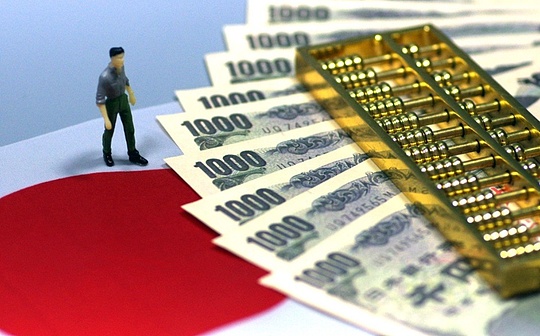
Bank of Japan Governor Kazuo Ueda said his policy committee may raise the benchmark interest rate this month.He emphasized that any interest rate increase is only an adjustment in the degree of easing policy, and the authorities will make appropriate decisions on whether to promote policy changes.In a speech to local business leaders in Nagoya, central Japan, on Monday, Ueda Kazuo said that Japan’s economy has recovered moderately, and the inflation rate is expected to briefly fall below 2% in the first half of fiscal 2026, then accelerate again, and be roughly consistent with the 2% target in the second half of the outlook period.He said that the synchronized upward trend of wages and prices has strengthened, and the impact of the exchange rate on prices has increased. In order to achieve the goal of price stability, loose policies will be adjusted in a timely manner.If the economy and prices continue to improve, further interest rate increases will be considered.
According to overnight index swaps data, traders expectedThe probability of the Bank of Japan raising interest rates at its next policy meeting on December 19 is about 64%.The probability of taking action before January next year has risen to 90%.After Ueda’s speech, the yen strengthened slightly against the US dollar.Ahead of his speech, the two-year Japanese government bond yield had risen to its highest level since 2008 as expectations for a rate hike by the Bank of Japan increased.
The Bank of Japan’s interest rate hike expectations have increased, and the Federal Reserve’s interest rate cuts have not yet been implemented. Uncertain factors in the macroeconomic environment have affected the direction of the cryptocurrency and other risk asset markets.
4. ETF net inflows have just recovered, but institutional funds are still insufficient.
Farside Investors data shows that the U.S. Bitcoin spot ETF had a cumulative net inflow of $73.2 million last week, and the U.S. Ethereum spot ETF last week had a cumulative net inflow of $312 million.BlackRock’s Bitcoin spot ETF IBIT experienced a net outflow of US$2.34 billion in November, with a net outflow of approximately US$463 million on November 14 and a net outflow of approximately US$523 million on November 18, twice setting the previous single-day outflow record.
Although there has been a net inflow of ETF funds, institutional admissions have just resumed, and compared with the previous large-scale exit of funds, the amount is still insufficient to support the overall sustained rebound of the market.
5. Giant Whale “OG” investors sold off, increasing downward pressure on the market
On-chain analyst @ai_9684xtpa monitors that the 2016 ETH Ancient Whale, which cost as low as $203.22, has been suspected of selling 7,000 ETH through Wintermute in the past month, with an average transfer price of $3,024. If sold, it would make a profit of $19.745 million.In addition, on-chain analyst Ai Ai monitored that the address that opened a position of 1,074WBTC at an average price of US$10,708 four years ago seemed to start selling ETH after selling out WBTC.This address once took profit of 1,000 BTC at an average price of $118,011 this year and made a profit of $107 million.This address deposited 5,000 ETH to Binance, worth US$15.36 million. In the past two weeks, it has deposited a total of 13,403.28 ETH to the exchange, with a total value of US$41.06 million.This address still holds 15,000 ETH.
The whale “OG” address has continued to sell large amounts of crypto assets recently, which has continued to exert downward pressure on the market and may be one of the triggers for the decline.
6. Positive factors are expected in December, which may stimulate market recovery
The Fed will officially end quantitative tightening (QT) today.It is reported that the Federal Reserve decided to end quantitative tightening (QT) at its interest rate meeting on October 29, 2025, starting from December 1, 2025.The Federal Reserve will begin tightening monetary policy in March 2022 and begin reducing bond holdings in June 2022, known as quantitative tightening (QT).Since 2022, the Fed has withdrawn more than $2 trillion from the market, and its balance sheet is now down to about $6.55 trillion.But starting on December 1, that will change and the Fed will stop pulling money from the market.
In addition,The Federal Reserve will announce its latest interest rate decision on December 10, the recent statements of key Federal Reserve officials, coupled with the “dovish” remarks of the popular candidate to be the next Federal Reserve Chairman under the Trump administration, have led to rising market expectations for the Federal Reserve to cut interest rates by 25 basis points in December.CME’s “Fed Watch” shows,The probability that the Fed will cut interest rates by 25 basis points in December is 87.4%, and the probability of keeping interest rates unchanged is 12.6%.The probability that the Fed will cut interest rates by 25 basis points cumulatively by January next year is 67.5%, and the probability of keeping interest rates unchanged is 9.2%.
Although the current crypto market continues to be sluggish, possible positive factors in December may stimulate a slight recovery in the market.
7. Market Analysis and Interpretation
At the beginning of December, cryptocurrency has had a “bad start”, and the market panic that has just slowed down is spreading again.How will cryptocurrencies fare with just one month left in 2025?Can the positive factors in December stimulate the market as expected, or will the cryptocurrency slump continue into 2026?Let’s take a look at the key interpretations of the market.
1. CryptoQuant’s latest research report states that, the total supply of ERC20 stablecoins has exceeded US$160 billion in 2025, hitting a record high, which is considered a key indicator for predicting Bitcoin price trends.Research points out that compared with the global M2 money supply, the correlation between stablecoin supply and Bitcoin price trends is more significant.The report analyzed that stablecoins, as the main source of liquidity in the crypto market, can reflect the flow of investors’ funds more quickly and directly, and the growth of their supply often leads the rise in Bitcoin prices.During both the 2021 bull run and the 2024-2025 market recovery, stablecoin supply growth significantly preceded Bitcoin price increases.The CryptoQuant research team stated that the current supply of stablecoins is at a historical high, indicating that the purchasing power of the bottom of the market continues to increase, which may become an important driving force for the next round of Bitcoin price trends.
2. Matrixport chart analysis scale, Bitcoin has just entered a rare stage: positions, market sentiment and macro policies collide at the same time.Implied volatility has fallen sharply and demand for crash protection has subsided, but prices remain stuck below a key level that has historically been difficult to re-break.At the same time, an important on-chain cost base metric is being tested, a level that has historically distinguished “panic” from “deep value.”Adding to the tension, interest rate cut expectations surged again as the Fed’s tone changed, but history shows that this is precisely the stage when many traders misjudge the subsequent trend.Seasonal patterns point in one direction, trend structures support another, and both are supported by data.
3. Market analyst MisterCrypto believes, market conditions already have the basis to push Bitcoin to rebound to the range of 100,000-110,000 US dollars.Bitcoin’s short-term structure is showing signs of stabilizing after what he called a “capitulation sell-off” in the market.He noted that indicators related to trader behavior show that large players have begun to open new long positions as market sentiment dips into extreme fear territory, a combination that historically has tended to herald rallies during declines.
4. Bitwise cryptocurrency researcher André Dragosch said, the macro environment currently faced by Bitcoin is “similar” to that during the COVID-19 epidemic.Based on the scale of previous monetary stimulus, global growth is expected to accelerate from here, suggesting that momentum will continue into 2026.Bitcoin’s current price does not appear to be in line with future macroeconomic prospects, so Bitcoin may still have a lot of room to rise.
5. BitMEX co-founder Arthur Hayes sticks to predictions, Bitcoin (BTC) will rise to $250,000 before the end of the year, an increase of approximately 170%.Hayes believes that Bitcoin has hit the bottom. It fell to $80,600 last week and has rebounded by about 12%.Hayes pointed out that the U.S. liquidity tightening cycle is coming to an end. The Federal Reserve has cut interest rates by 25 basis points in October. The market expects that quantitative tightening (QT) will end as early as early December, and there is an 87% probability of continuing to cut interest rates on December 10.Coupled with the reset effect brought about by the crypto market leverage liquidation on October 11, it will provide Bitcoin with upward momentum.While he acknowledges that forecasts may be off, he remains bullish and optimistic over the long term.
6. Crypto analyst Ali wrote:, “Bitcoin (BTC) typically resumes gains after on-chain traders lose more than 37%. Currently, the indicator is at 20%.”
7. Cryptocurrency sentiment analysis platform Santiment stated, the price of Ethereum (ETH) may rise by nearly 7% in the short term; this is based on the fact that the current stablecoin yield is at a low level, which indicates that the cryptocurrency market has not yet entered an overheated state.Santiment noted in a report published on Saturday: “The current stablecoin yield is low, about 4%. This phenomenon indicates that the market has not yet reached a major top and there is still room for further growth.” The platform also predicted that Ethereum may soon test the resistance level of $3,200.