 jakiro
Author: Jack Inabinet, Source: Bankless, Compiler: Shaw Bitcoin Vision
On October 6, 2025, Bitcoin hit another all-time high, surpassing the $126,000 mark, and holders were immersed in ubiquitous optimism. This atmosphere could be felt everywhere from the corners of cryptocurrency forums to the newsroom of CNBC.
While fundamentals may not have changed much in the month since, cryptocurrencies were hit with a crisis just days later on October 11th… The so-called “10/11” flash crash has now become the largest liquidation event in cryptocurrency history.
During this catastrophic drop, major cryptocurrency prices fell by double digits, many altcoins went almost to zero, and cryptocurrency exchanges were liquidated (nearly every major perpetual contracts exchange “auto-deleveraged” their short positions due to their inability to pay).
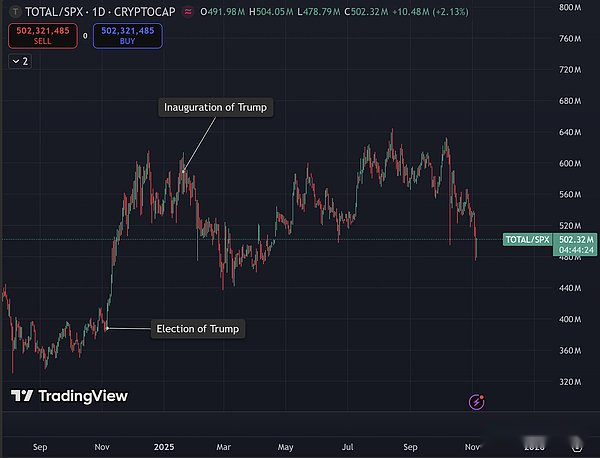
While the election of Donald Trump as president has brought about many seemingly positive things for the cryptocurrency industry—from the establishment of a strategic Bitcoin reserve to the appointment of ostensibly pro-crypto regulators—cryptocurrency prices have been underperforming recently.
Aside from a brief surge last November after Trump won the presidential election, the ratio of total cryptocurrency market capitalization (TOTAL) to the S&P 500 has remained flat for nearly a year.In fact, since Trump took office on January 20, this ratio has even experienced alarming negative growth.
As the cryptocurrency market continues to grapple with the unknown consequences of October’s liquidations, more and more victims may surface.
This week, Stream Finance — an actively managed cryptocurrency income fund with $200 million under management that used leverage to provide depositors with above-market returns — declared bankruptcy after “an external fund manager overseeing the Stream Fund” lost approximately $93 million in fund assets.
While specific details are unclear, it appears likely that Stream is the first publicly reported victim of a delta-neutral hedging strategy in the industry-wide “automatic deleveraging” (ADL) wave sweeping the cryptocurrency market.Given Stream’s structure, its collapse was not entirely unforeseeable, but it certainly caught many lenders off guard.They sacrificed safety in pursuit of higher returns without a concrete catalyst.
Fears of the next bankruptcy immediately spread across the decentralized finance (DeFi) space, causing lenders to flee any high-yielding strategies that might face similar risks.

Although the instant contagion effect of Stream seems to be under control at present, this liquidation incident still highlights the risks of the circulating stablecoin mining strategy now prevalent in DeFi, which uses deposit tokens of existing high-risk return strategies to obtain higher returns.
Stream’s self-disclosed losses also indicate that any delta-neutral hedging strategy crypto fund may suffer huge losses due to ADL, which unilaterally canceled the short position hedge and made the spot long position instantly worthless.
Although the headlines are no longer focused on the matter, the October liquidation may have caused catastrophic losses.
Whether done transparently through DeFi or covertly through centralized finance (CeFi), billions of dollars in leverage have been invested in cryptocurrency income funds, and the market appears to lack sufficient liquidity to unwind these positions amid a potential future wave of liquidations.
It’s unclear who the ultimate victim is, but there are definitely people in the cryptocurrency market taking risks with their bare hands.If markets are in turmoil again, especially if lawsuits surface that claim centralized exchanges were insolvent in October’s liquidations, the question won’t be whether losses will be incurred, but whether the industry as a whole can withstand it.