
 jakiro
Author: Zhang Feng
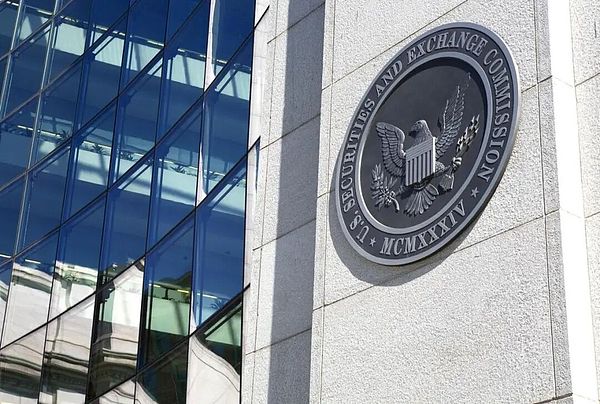
Paul S. Atkins, Chairman of the U.S. Securities and Exchange Commission (SEC), delivered a speech at the Cryptocurrency Working Group Roundtable held on December 15, 2025, and gave a profound explanation around the issue of financial privacy and regulatory balance in the blockchain era.He clearly stated,If regulation goes in the wrong direction, cryptocurrencies could become “the most powerful financial surveillance architecture ever created.”, and even pushed the entire industry into the abyss of the “financial panopticon”.Today, with the deep integration of digitalization and blockchain technology, how to implement effective financial supervision without infringing on personal privacy has become a common challenge faced by regulatory agencies around the world.
1. Why is this issue important?——Wrong supervision may lead to the “financial panopticon”
In his speech, Atkins pointed out straight to the point that cryptocurrency and blockchain technology have unprecedented transaction transparency and traceability.Every on-chain transaction is recorded on a public ledger, and on-chain analytics companies have been able to efficiently assist law enforcement agencies in correlating on-chain activities with real identities.This technical feature is like a double-edged sword: On the one hand, it helps to combat illegal financial activities, but on the other hand, it can also be abused as a comprehensive surveillance tool.
If regulators adopt an extreme, all-encompassing regulatory approach—for example, treating every wallet as a broker, every piece of code as an exchange, and every transaction as mandatory reporting—then the entire crypto ecosystem will be forced into a state of “panoramic surveillance.”In this state, every transfer, every position adjustment and even every smart contract interaction made by the user will be exposed.Personal financial privacy will be lost, the vitality of innovation will also be stifled.
As Atkins warned: “Public blockchains are more transparent than any previous traditional financial system… If supervision is in the wrong direction, cryptocurrency may become the most powerful financial surveillance architecture in history.” This is not only about technical ethics, but also touches on the core contradiction of the modern financial system:Where should we draw the line between ensuring security and defending freedom?
2. Basic principles for solving this problem: Pay equal attention to national security and citizen privacy
Atkins emphasized that the nature of this issue is “very American.”Can people participate in modern financial activities without sacrificing privacy?.This reflects the long-standing value trade-off in American society between national security and personal freedom.
On the one hand, the government has the obligation to curb illegal financial activities and protect citizens and the country from security threats through tools such as the Bank Secrecy Act; on the other hand, “citizens can freely handle personal affairs without government surveillance” is one of the core values of the United States.The emergence of cryptocurrency provides an opportunity to rethink this balance in the technological context of the 21st century.
Therefore, the basic principles of supervision should be:We must not only effectively prevent risks and safeguard national security, but also fully respect and protect citizens’ right to financial privacy..Any policy that unilaterally emphasizes surveillance or is completely laissez-faire will harm the long-term healthy development of the financial system.
3. The existing tools of the Commission and the boundaries of their use: looking at regulatory self-restraint from the perspective of the CAT system
The SEC has established a series of data collection and monitoring tools over the past few years, such asComprehensive Audit Trail (CAT), Swaps Data Repository and PF FormsWait.These tools have played a certain role in improving market transparency and combating fraud, but they have also exposed the risk of regulatory overreach.
Taking the CAT system as an example, Atkins pointed out that the system was originally designed to help the SEC have a clearer understanding of market trading conditions, but has gradually evolved into a “powerful monitoring system” that has brought the SEC “one step closer to large-scale monitoring.”What is more noteworthy is thatThe government didn’t even make full use of all the information that was submitted, but allows investors to bear unnecessary costs and privacy risks.
To this end, the SEC has taken proactive steps to reduce some of the most sensitive data elements in the CAT and re-examine its scope and cost.This approach reflects the role that regulatory agencies shouldSelf-restraint and instrumental rationality——Not blindly pursuing data maximization, but carefully evaluating the necessity and rationality of each type of information.
4. Regulatory challenges in the digital age: The easier it is to obtain information, the more modest it is to remain
In the “analog era”, financial supervision is limited by paper records, physical distance and manual processes. These objective restrictions provide a certain degree of protection for personal privacy.However, in the digital age, especially after the popularization of blockchain technology,The cost and threshold for obtaining information have been significantly reduced, regulatory agencies can have a near-real-time, panoramic view of user trading behavior.
If this technological convenience is abused, it can easily lead to excessive surveillance.Atkins quoted economist Hayek’s views in “The Fatal Conceit” and criticized the bureaucratic thinking that “thinks that as long as enough information is gathered and enough experts are gathered, a perfect solution can be found.”In fact,Information does not equal wisdom, and data accumulation does not equal effective supervision..
Therefore, in the digital age, regulatory agencies should maintain “humility and principles” and avoid surveillance overreach due to technological convenience.It is in this context that the discussion of cryptocurrencies and privacy-enhancing technologies (such as zero-knowledge proofs) is particularly important.
5. Avoid excessive supervision: do not turn all links into monitoring nodes
Atkins explicitly opposes bringing every component of the crypto ecosystem under regulatory coverage.He pointed out that if the government “treats every wallet as a broker, every software as an exchange, every transaction as a reportable event, and every protocol as a surveillance node,” then the entire system will become a “financial panopticon.”
Fortunately,Blockchain technology itself also provides tools to protect privacy, such as zero-knowledge proof, selective disclosure, compliance proof wallet, etc.These technologies allow users to demonstrate compliance with regulatory requirements without having to reveal full financial details.For example, regulated platforms can prove that their users have passed anti-money laundering screenings without permanently keeping a complete record of every transaction.
This provides the possibility of “less disclosure, more compliance” and also opens up a new path for regulatory innovation:It is not to strengthen monitoring by increasing data reporting, but to achieve compliance verification through technical means while protecting privacy..
6. Ensure normal business operation: allow some information not to be disclosed to maintain market health
The normal operation of financial markets requires a certain degree of privacy and confidentiality.Atkins noted that many institutions rely onOpen positions, test strategies, provide liquiditycapabilities, and if these activities are fully disclosed in real time, they will lead to distortions such as front-running, copycat behavior, and “following the trend of selling.”
For example, if market makers and underwriters had to disclose every inventory adjustment or capital movement in real time, their business attractiveness would be significantly reduced, and market liquidity could also be damaged.Therefore,Moderate information opacity is a necessary condition for the healthy operation of the market, regulation should leave room for reasonable commercial privacy.
This holds true in the cryptocurrency market as well.If every on-chain transaction and every smart contract call is completely exposed, it will not only inhibit institutional participation, but may also encourage market manipulation.Therefore, the regulatory framework should find a balance between transparency and confidentiality.
7. Build a goal framework: Technological progress should not be at the expense of personal freedom
Atkins concluded his speech by proposing that the ultimate goal should be to build aPromote technological innovation and financial development without sacrificing personal freedomregulatory framework.This framework should have the following characteristics:
principle oriented: Based on the basic principle of balancing national security and personal privacy;
technology neutral: Make good use of privacy enhancement technology to achieve “compliance without monitoring”;
Hierarchical supervision: Distinguish between different entities and different behavioral risks to avoid one size fits all;
Dynamic adjustment: Continuously optimize regulatory tools in line with technological development and market changes.
He emphasized that this matter has “far-reaching significance and lasting impact” and requires regulatory agencies, industry and the public to participate in discussion and design.Only through collaboration can we find a “feasible path that balances security and innovation without sacrificing personal privacy.”
8. Enlightenment for my country’s supervision: Rethinking goals, principles, tools and frameworks
This discussion by the U.S. SEC also has important implications for my country’s regulatory practices in the field of digital currency and blockchain:
Regulatory objectives should be clearly balanced.In the process of promoting the development of blockchain technology and regulating cryptocurrency transactions, our country should also establishSafety and freedom are both importantregulatory objectives.It is necessary not only to prevent financial risks and combat illegal crimes, but also to protect the legitimate rights and interests of users and encourage technological innovation.
Regulatory principles should emphasize restraint.When using big data, blockchain analysis and other tools, regulatory agencies should maintain tool rationality and power restraint to avoid excessive monitoring due to technological convenience.We can learn from the SEC’s reflection on the CAT system and establishData collection necessity review mechanism.
Regulatory tools should be adapted to technology.my country can actively exploreZero-knowledge proof, homomorphic encryption, multi-party computationThe application of other privacy protection technologies in compliance promotes a regulatory model of “data minimization, verification and trustworthiness”.For example, in anti-money laundering monitoring, it is possible to “demonstrate compliance without disclosing transaction details.”
The regulatory framework should encourage innovation.When formulating relevant regulations, a certain amount of space should be left for technological iteration and business practice to avoid stifling innovation due to overly detailed rules.Can be consideredSandbox supervision and classification pilotand other methods to explore the balance between supervision and privacy in a controlled environment.
Industry self-regulation should come into play.Encourage industry organizations to formulate privacy protection and compliance standards, promote enterprises to consciously adopt privacy-enhancing technologies, and formGovernment supervision, industry self-discipline, and corporate self-awarenessthree-tier governance system.
Paul S. Atkins’ speech profoundly revealed the core contradictions and possible paths of financial regulation in the encryption era.Today, when technological capabilities are unprecedentedly powerful, regulators need to maintain sobriety and restraint to avoid falling into the trap of “panoramic surveillance.”Make good use of existing tools, ensure normal business operations, and maintain power restraint, may be the key to achieving a balance between encryption supervision and privacy protection.This is not only a challenge to the United States, but also a common question for every country in the world exploring the future of digital finance.