
 jakiro
Author:Anthony Pompliano, founder and CEO of Professional Capital Management, compiled by: Shaw Bitcoin Vision
The U.S. economy is suffering from multiple deflationary factors at the same time.These intertwining trends force the Fed to lower interest rates and print more money.
First, we know that artificial intelligence and robotics are greatly improving the efficiency of every aspect of the system.Nowadays, businesses can generate more profits with fewer employees, which is often referred to as“Healthy deflation”.Healthy deflation is when supply grows faster than demand.
So, where do we see this happening in today’s economy?We see numerous examples of productivity surges, cost compression, and quality improvements.这催生了一种“通缩式繁荣”,商品和服务价格下降,增强了消费者的购买力,并在不导致经济过热的情况下支撑GDP增长。
Not only does AI increase business productivity, but we are getting closer to the point where AI can write its own software.Technology experts promise that eventually humanoid robots will take on many jobs in society, including building and assembling more of them.This exponential increase in productivity is difficult to comprehend today.But this is perhaps the most important trend affecting deflation.
埃隆·马斯克,这位在人工智能与机器人技术交叉领域创立了多家价值数十亿美元公司的创始人,近期谈到这些技术应如何引发通货紧缩并助力解决国家债务危机。
When Elon lays out his views on these technologies, combined with the growth of the U.S. money supply, it seems like deflation is the obvious end result.
But Elon understands that the impact of artificial intelligence and robotics on the economy will not be enough to cause deflation.造成这种差距的部分原因是美国政府大量印钞,但另一方面也是因为人工智能和机器人技术仍处于相对初级的阶段。
Elon estimates the U.S. economy will enter deflation within three years.
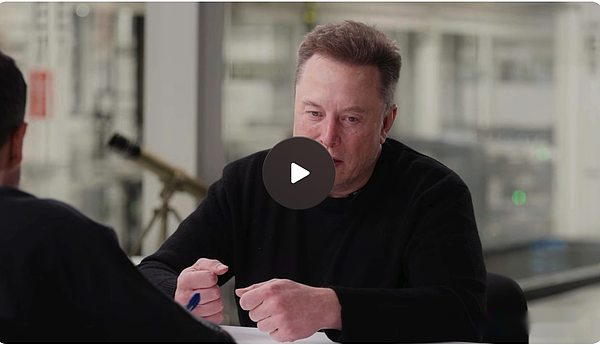
Elon Musk is known for his aggressive timelines, and many critics believe his estimates are off by at least a decade.However, I don’t think so.创新的步伐,以及人工智能和机器人技术采用速度的加快,都让我觉得这种通缩效应比大多数人所意识到的要近得多。
These technology trends don’t happen in isolation, either.
The second big trend we need to watch isDemographic changes and proposed policy changes.Both are suppressing consumer demand and shrinking the labor supply, potentially creating a “deflationary shock.”Economist David Rosenberg highlights three intertwined forces:
-
aging workforce:美国人口中位年龄为42.3岁(2000年为36岁),到2035年,人口抚养比(非劳动年龄人口与劳动年龄人口之比)将上升至37%,这会减少在非必需品上的支出。
-
immigration restrictions: Stricter policies have limited population growth and the inflow of low-wage labor, suppressing family formation and demand for services.
-
tariff:广泛的关税(例如对进口商品征收的关税)可能会因提高成本而大幅削减消费者支出,从而导致需求断崖式下降。
These three factors may weaken aggregate demand, causing companies to cut prices and clear inventory when faced with oversupply, thus triggering a fall in prices.从积极方面来看,需求下降或许能稳定住房和服务业的通胀,但同时也可能引发消费延迟和失业增加的恶性循环,尤其是在零售和建筑行业。
Striking this balance is crucial.what we want isDeflation, not recession.This can only be achieved by creating positive supply-side factors rather than a collapse in demand.This is often referred to as “benign deflation” or “growth deflation,” in which prices fall because of productivity gains, technological advances, or efficiency gains that boost output and real incomes.
For example, the decline in energy costs over the past year is a manifestation of this “benign deflation.”Energy costs have fallen due to higher domestic production, weaker global demand, and efficiency gains from renewable energy and artificial intelligence optimizing the grid.U.S. gasoline prices are expected to be 3% lower in 2025 than in 2024 (11 cents per gallon), with energy inflation down 1.6% year over year as of July 2025.
Falling energy prices had a broad dent in inflation, including lower input costs in manufacturing and transportation.This increases household disposable income (for example, the average driver saves about $150 per year on fuel costs) and supports profit margins in energy-intensive industries.However, continued declines in energy prices could harm oil/gas producers (example: layoffs in Texas), leading to a regional economic slowdown.Nationally, this strengthens the Fed’s path to achieving its 2% inflation target, but heightens deflationary risks if demand weakens elsewhere.
In the case of energy costs, these drivers are primarily from the supply side (AI and increased energy production) or demand constraints (demographics/policies).This combination promotes sustainable growth but also increases the risk of a sharp economic downturn if it intensifies.Again,Grasping the balance between deflation and recession is crucial.
America has successfully done this many times in its history.Here are some periods:
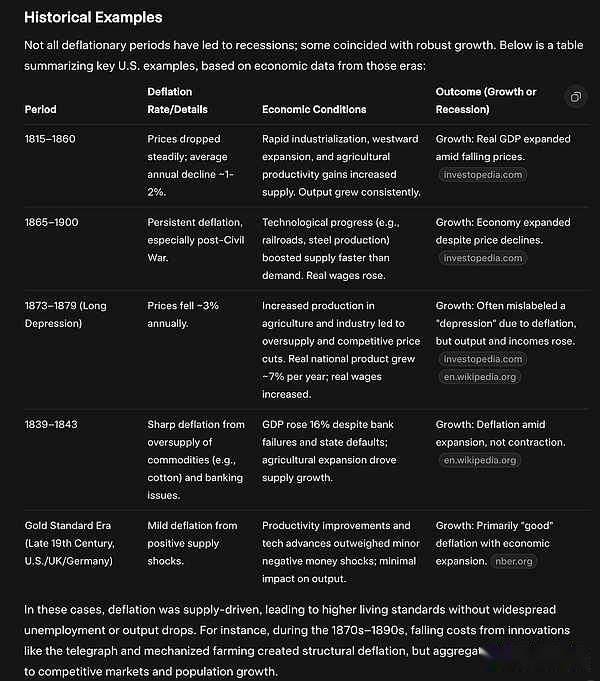
We’ve done it before, which means we can do it again.Technology, demographics and policies can all lower prices and create economic prosperity.
Elon Musk knows it’s possible.He is working hard to create this future.But with all the talk about inflation, many investors still seem unprepared for a world in which deflation dominates the economy.
As Stanley Druckenmiller once said, “Every severe deflation I have ever observed has been accompanied by an asset bubble that then burst.” Given current price levels, many people are clamoring for the existence of an asset bubble.So the question now is:“Will asset bubbles burst and trigger deflation?”
Let each of you answer this question for yourself.