 jakiro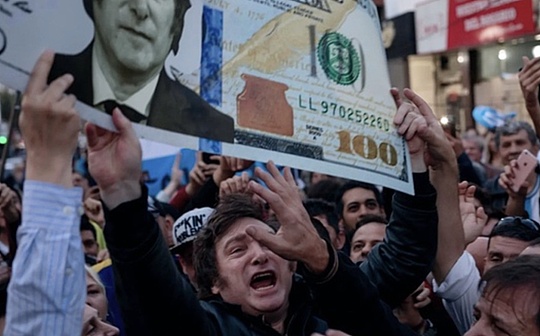
Author: Sleepy.txt
In Argentina, even the dollar has failed.
Pablo’s identity is somewhat special.Ten years ago, he was a Huawei employee assigned to Argentina and lived in this South American country for two years; ten years later, in order to participate in the Devconnect conference, he returned to his hometown as a Web3 developer.
This perspective spanning ten years made him an eyewitness of a cruel economic experiment.
When he left that year, one U.S. dollar could only be exchanged for a dozen pesos; today, Argentina’s black market exchange rate has soared to 1:1,400.According to the simplest business logic, this means that if you have dollars in your pocket, you should have imperial purchasing power in this country.
However, this sense of “dollar superiority” only lasted until the first lunch.
“I deliberately returned to the ordinary neighborhood where I lived before and found a small restaurant where I always went to eat,” Pablo recalled. “I ordered a bowl of noodles and it actually cost 100 yuan when converted into RMB.”
It is not a wealthy area where tourists gather, but a “fly restaurant” filled with the fireworks of life.Ten years ago, the per capita cost of eating here was only 50 yuan; but now, in this place defined as a “failed country” by the global media, prices are directly comparable to Shanghai’s CBD or Paris in Western Europe.
This is typical “stagflation”.While the peso has lost more than 100 times its value, dollar-denominated commodity prices have increased by more than 50 percent.
When a country’s credit completely collapses, inflation will be like an indiscriminate flood. Even if you are sitting on the seemingly solid ship of the US dollar, the water level will still reach your ankles.This country has a magical way of passing on the costs of currency collapse to everyone, including those holding hard currency.
Many thought that amid such intense turmoil, people would panic hoard dollars or embrace cryptocurrencies, as tech believers predicted.But we were all wrong.
Here, young people neither save nor buy houses, because the value of their wages begins to evaporate the moment they receive it; here, it is not the central bank that truly controls the financial lifeline, but a shadow financial network woven by Jewish banks in the Once district and more than 10,000 Chinese supermarkets across Argentina.
Welcome to underground Argentina.
Young people dare not have a future
To understand Argentina’s underground economy, we must first understand the survival logic of a group: those young people who “enjoy themselves in time.”
If you walk on the streets of Buenos Aires at night, you will have a serious cognitive illusion. The bars here are bustling with people, the tango dance halls play music all night long, and the young people in the restaurants still generously pay 10% tips.This does not look like a crisis country undergoing “shock therapy”, but rather like a prosperous era.
But this is not a symbol of prosperity, but a kind of “doomsday carnival” that is almost desperate.In the first half of 2024, the country’s poverty rate soared to 52.9%; even after Milley forced reforms, 31.6% of people were still struggling below the poverty line in the first quarter of 2025.
In the grand narrative of the Web3 community, Argentina is often described as a “cryptotopia.”The outside world imagines that in this country where the currency is invalid, young people will madly buy USDT or Bitcoin to avoid risks as soon as their wages are paid.
But Pablo coldly burst the bubble of this elite perspective during his on-site visit.
“This is actually a misunderstanding,” Pablo pointed out bluntly. “Most young people are typical earners. After paying rent, water, electricity and daily expenses, there is little left. They have no savings to exchange for US dollars or stable coins.”
It’s not that they don’t want to avoid risks, it’s that they are not qualified to avoid risks.
What hinders saving is not just poverty, but also “the devaluation of labor.”
From 2017 to 2023, Argentinians’ real wages fell by 37%.Even with nominal wages rising since Milley came to power, private sector wages have lost 14.7% of their purchasing power over the past year.
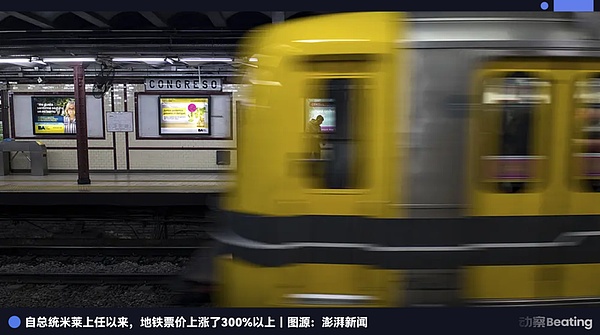
What does this mean?This means that a young Argentinean will work harder this year than last year, but the bread and milk he can exchange for will become less.In this environment, “savings” has become a ridiculous joke.As a result, an almost rational “inflation immunity” has spread among this generation.
Since no matter how hard you try, you can’t save enough for the down payment to buy a house, and since the speed of saving money can never catch up with the speed of money evaporation, then immediately converting the pesos in your hand that may turn into waste paper into happiness at this moment becomes the only rational choice in economics.
A survey showed that 42% of Argentines feel anxious all the time and 40% are deeply tired.But at the same time, a whopping 88% of people admit to combating this anxiety through “emotional consumption.”
This contradiction in collective psychology is the epitome of the ups and downs of this country over the past century. They use tango dance steps to fight against the uncertainty about the future, and use barbecue and beer to numb the powerlessness deep in their hearts.
But this is just the surface of underground Argentina. Where do the billions of pesos in cash that young people spend crazily spend finally go?
They haven’t disappeared.Under the cover of night in Buenos Aires, the cash flowed like underground rivers, eventually converging into the hands of two most special groups.
One of them is the largest “cash vacuum cleaner” in Argentina, and the other is the “underground central bank” that controls the lifeblood of the exchange rate.
Chinese supermarkets and Jewish banks
If the Central Bank of Argentina suddenly announces a shutdown tomorrow, the country’s financial system may fall into a brief chaos; but if those 13,000 Chinese supermarkets close at the same time, Argentina’s social operations may immediately be paralyzed.
In Buenos Aires, the real financial heart beats not in the splendid bank buildings, but hidden in the cash registers in the streets and deep mansions in the Once district.
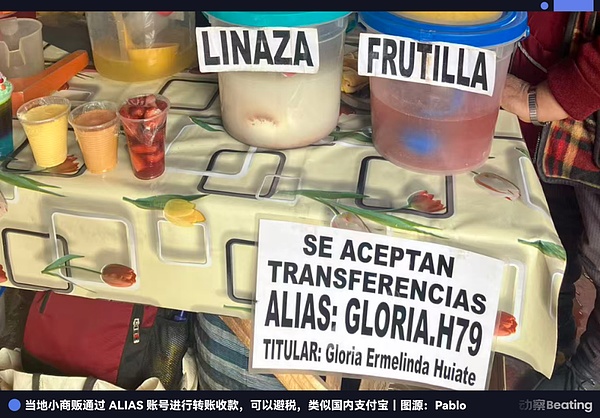
This is a secret alliance forged by two groups of outsiders: one group is supermarket owners from China, and the other group is Jewish financiers who have been involved in the business for hundreds of years.
In Argentina, nothing penetrates the urban fabric like capillaries like “Supermercados Chinos” (Chinese Supermarkets).As of 2021, the number of Chinese supermarkets in Argentina has exceeded 13,000, accounting for more than 40% of the total supermarkets in the country.They are not as big as Carrefour, but they are everywhere.
For Argentina’s underground economy, these supermarkets are not just places that sell milk and bread. They are essentially “cash-sucking outlets” that operate around the clock.
Most Chinese supermarkets will try their best to allow customers to pay with cash. Some restaurants will remind you to enjoy discounts when paying with cash, and some will even directly post a notice: “Cash payment discount 10% ~ 15%.”
This is actually to avoid taxes.Argentina’s consumption tax is as high as 21%. In order to prevent the government from taking away this piece of the pie, businesses are willing to give profits to consumers, just to keep the massive turnover outside the official financial system.
“The tax bureau must also know about it, but they have never investigated it strictly.” Pablo said in the interview.
A report in 2011 showed that at that time, the annual sales of tens of thousands of Chinese supermarkets had reached US$5.98 billion.Today, more than ten years later, this number will only become larger.But there is a fatal problem here. The peso is “hot”. In an environment of annual triple-digit inflation, it is depreciating every minute and every second.
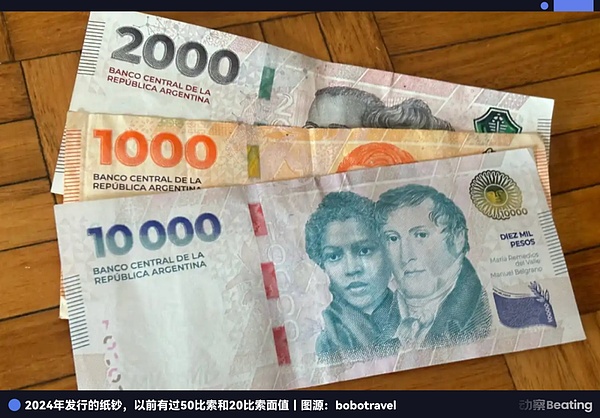
“Chinese businessmen have earned a lot of pesos in cash and need to exchange them for RMB to return home, so they will find various ways to exchange money.” Pablo said, “Then for Chinese tourists, the most convenient exchange channel with the best exchange rate is Chinese supermarkets or Chinese restaurants, because they urgently need RMB to hedge the pesos in their hands.”
However, scattered tourists cannot afford such a large amount of cash. Chinese supermarkets need another outlet. In Buenos Aires, only the underground banks represented by the Jews from the Once district have the ability to swallow such a large amount of cash.
“Historically, Jews gathered in a wholesale area called Once. If you have seen movies about Argentine Jews, some scenes were based on Once.” Pablo said, “There is a Jewish church there, and it is also the only place in Argentina where a terrorist attack has occurred.”
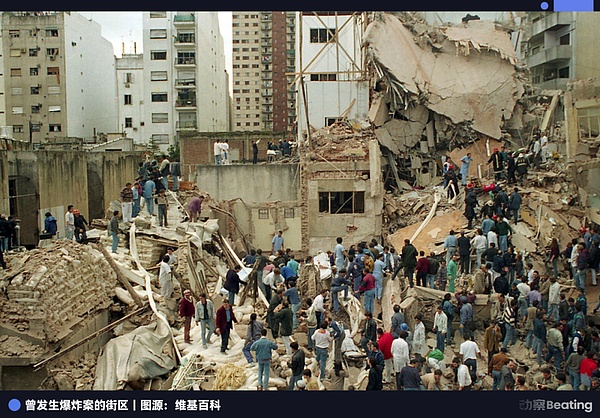
He was talking about the AMIA bombing of July 18, 1994.
That day, a car full of explosives crashed into the AMIA Jewish Community Center. The explosion killed 85 people and injured more than 300 people. It was the darkest page in Argentina’s history.After that incident, a huge wall was erected outside the church, with “peace” written on it in various languages.
This disaster completely changed the Jewish community’s philosophy of existence.Since then, the entire community has become extremely closed and vigilant.Not only did these walls keep out bombs, they also allowed them to form an extremely introverted, highly united circle.
As times changed, Jewish merchants gradually withdrew from the physical wholesale industry and turned to the field they were better at – finance.
They run an underground bank called “Cueva (Cave)” and use their deep connections in the political and economic fields to build a capital circulation network that is independent of the official system.So far, some of them have moved out of the Once district, and more ethnic groups, including Chinese, have started underground bank businesses.
Under Argentina’s long-standing foreign exchange controls, there was at one time a huge spread of more than 100% between the official exchange rate and the black market rate.This means that anyone who honestly exchanges currency through official channels will have their asset value evaporated by half in an instant.This forces both businesses and individuals to rely on the underground financial network built by the Jews.
Chinese supermarkets generate huge amounts of peso cash every day and urgently need to exchange it into hard currency; Jewish banks have U.S. dollar reserves and global fund transfer channels, but they need a large amount of peso cash to maintain daily loan sharking turnover and exchange business.The needs of the two are accurately connected, and a perfect closed business loop is born.
Therefore, in Argentina, specialized cash trucks (or a few inconspicuous private cars) shuttle between the Chinese supermarket and the Once district in the dark every day.The Chinese’s cash flow provides a steady stream of blood for the Jewish financial network, while the Jewish dollar reserves provide the only escape route for the Chinese’s wealth.
There is no need for cumbersome compliance reviews or waiting in line at banks. Relying on this cross-ethnic tacit understanding and trust, this system has operated efficiently for decades.
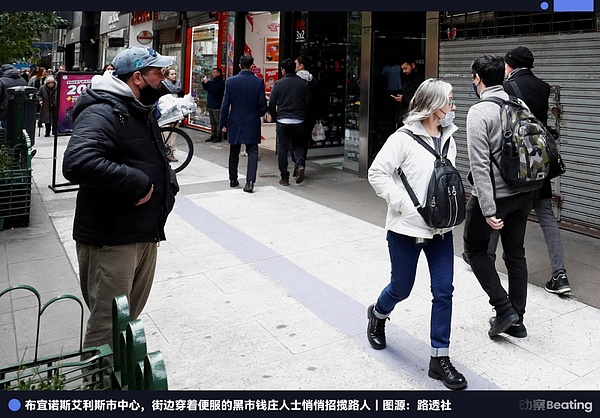
In that era when the state machine failed, it was this illegal underground system that supported the most basic survival needs of countless ordinary families and businesses.Compared with the shaky official peso, Chinese supermarkets and Jewish banks are obviously more trustworthy.
peer-to-peer tax avoidance
If Chinese supermarkets and Jewish banks are the main artery of Argentina’s underground economy, then cryptocurrency is the more hidden vein.
Over the past few years, a myth has been perpetuated in global Web3 circles: Argentina is the mecca of cryptocurrencies.The data seems to support this – in this country with a population of 46 million, the holding rate of cryptocurrency is as high as 19.8%, ranking first in Latin America.
But when you delve into the land like Pablo did, you’ll find that the truth behind the myth isn’t sexy.Not many people here are talking about the ideal of decentralization, and not many people care about the technological innovation of blockchain.
All enthusiasm ultimately points to a naked verb: escape.
“Outside the currency circle, ordinary Argentinians don’t have a high awareness of Crypto,” Pablo said.For most Argentines using cryptocurrencies, this is not a revolution about financial freedom, it is just a self-defense war about asset preservation.They don’t care about what Web3 is, they only care about one thing: whether USDT can keep the money in my hands from shrinking.
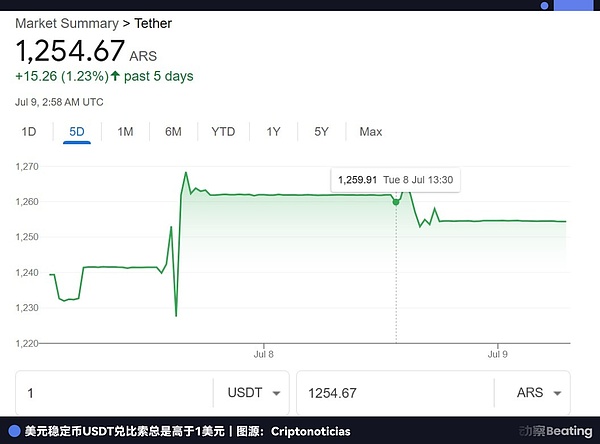
This explains why stablecoins account for 61.8% of Argentina’s crypto trading volume.For freelancers, digital nomads, and wealthy people with overseas businesses, USDT is their digital dollar.
Compared to hiding dollars under your mattress or risking a trip to the black market to exchange, converting pesos to USDT with the click of a mouse is more elegant and safer.
But safety is not the only consideration. The deeper motivation is concealment.
For the people at the bottom, their “cryptocurrency” is cash.
Why do Chinese supermarkets like to accept cash?Because cash payment does not require an invoice, the 21% tax is directly saved.For working-class people whose monthly salary is only a few hundred dollars, this crumpled peso is their “tax haven.”They don’t need to understand blockchain, they just need to know that paying with cash is 15% cheaper.
For the middle class, freelancers, and digital nomads, stablecoins such as USDT play the same role.Argentina’s tax office could not detect the on-chain transfer.One local Web3 practitioner described cryptocurrencies as a “digital Swiss bank.”If a programmer who takes on an overseas project in Argentina collects money through a bank, he will not only be forced to settle the foreign exchange at the official exchange rate, but also pay a high personal income tax.But if you receive payment in USDT, the money is completely invisible.
This logic of “peer-to-peer tax avoidance” runs through every stratum of Argentine society.Whether it is a cash transaction by a street corner vendor or a USDT transfer by the elite, it is essentially a distrust of the credit of the country and the protection of private property.In a country with high taxes, low welfare, and a constantly devaluing currency, every “grey transaction” is a resistance to systemic plunder.
Pablo recommended a WebApp called Peanut, which can be used without downloading, has an exchange rate close to the black market price, and even supports Chinese identity authentication. Now this application is growing rapidly in Argentina.The popularity of this application just proves the market’s desire for “escape channels.”
Although tools have become within reach, this Noah’s Ark still only carries two types of people, one is the complete Underground (poor people who use cash and rich people who use Crypto), and the other is digital nomads with overseas income.
When the poor are using cash to avoid taxes and the rich are using Crypto to transfer assets, who is the only loser in this crisis?
The answer is heartbreaking: “honest people” who abide by the law.
Compliance kills honest people
We often think that having a decent, tax-paying, legal job is the ticket to the middle class.But in a country with a dual currency system and out-of-control inflation, this “compliance ticket” has turned into a heavy shackles.
Their dilemma stems from an unsolvable arithmetic problem: income is anchored to the official exchange rate, and expenditure is anchored to the black market exchange rate.
Suppose you are an executive in a multinational company earning a monthly salary of 1 million pesos.In the official statement, based on the official exchange rate of 1:1000, your monthly salary is equivalent to US$1,000.But in real life, when you go to the supermarket to buy milk or go to a gas station to refuel, all prices are anchored to the black market exchange rate (1:1400 or even higher).
With this in and out, your actual purchasing power has been cut in half the moment your salary arrives.
What’s worse is that you don’t have the qualifications to be “invisible”.You cannot evade taxes by discounting cash like a Chinese supermarket owner, nor can you hide your assets by receiving payments in USDT like a digital nomad.Every penny of your income is within the range of the Inland Revenue Service (AFIP), completely transparent and with no escape.
As a result, a cruel sociological phenomenon emerged.From 2017 to 2023, a large number of “New Poor People (Nuevos Pobres)” emerged in Argentina.
They were originally decent middle class people, highly educated and living in nice neighborhoods.But being hit by rising living costs and depreciating incomes, they watched themselves slide toward the poverty line.
This is a “reverse elimination” society.Those who are comfortable in the underground economy—Chinese supermarket owners, Jewish bank operators, freelancers collecting USDT—they hold the code to survive in the ruins.And those who try to “work well” within the official system end up paying the cost of the system.
Even the most astute people in this group are doing nothing more than a “defensive” struggle.
In the interview, Pablo mentioned the “financial wisdom” of the Argentine middle class.For example, use platforms such as Mercado Pago to earn annualized returns of up to 30% to 50% to survive.
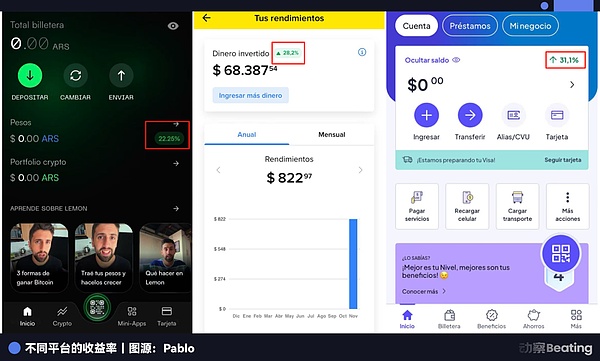
Sound high?But Pablo made a calculation: “Taking into account the exchange rate wear and tear of inflation, such an APY can only keep the value of the peso in their hands unchanged in U.S. dollars when the exchange rate is stable, but the exchange rate is often unstable. In general, such a rate of return cannot keep up with the depreciation speed of the peso.”
In addition, many savvy Argentinians will cash out through credit cards regardless of wear and tear before the peso plummets, and then exchange them for US dollars, taking advantage of the time difference in inflation for arbitrage.
But these are just “defense”, not “offense”.In a country where currency and credit are collapsing, all financial management and arbitrage are essentially attempts to “not lose money” or “lose less”, rather than to truly increase wealth.
The collapse of the middle class is often silent.
They will not take to the streets to burn tires in protest like the bottom class, nor will they immigrate directly like the rich.They just quietly canceled weekend dinner parties, changed their children’s private schools, and spent every late night anxiously calculating next month’s bills.
They are the most obedient taxpayers in this country, and they are also the most thoroughly harvested group of people.
Gambling on national fortunes
Pablo returned to Argentina this time, and in a socket in the corner, he saw the epitome of the country’s turn.
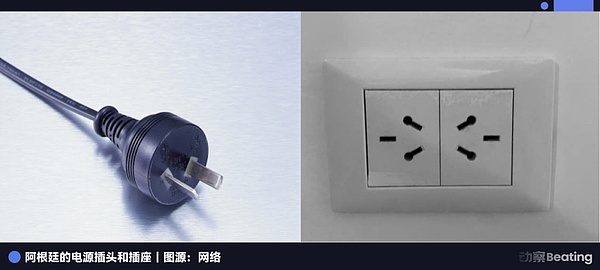
At one time, Argentina practiced a kind of almost absurd trade protectionism. All electrical appliances must comply with the “Argentine standards” and the upper end of the universal triangular plug was forcibly removed, otherwise they were prohibited from sale.This is not just a matter of plugs, it is a symbol of mercantilist barriers, using administrative orders to force citizens to pay for domestic industries with inferior quality and high prices.
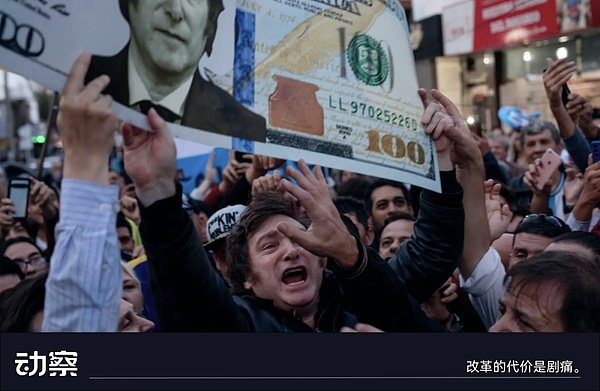
Now, Millay is tearing down that wall.This “crazy” president who believed in the Austrian school of thought wielded a chainsaw and conducted a social experiment that made the world wonder: cutting 30% of government spending and lifting years-long foreign exchange controls.
With this cut, the effect is immediate.The fiscal surplus has not been seen for many years, the inflation rate has dropped from the crazy 200% to the 30% range, and the official-black exchange rate spread that was once as high as 100% has been compressed to about 10%.
However, the price of reform is severe pain.
When subsidies were cut and the exchange rate was liberalized, the new poor and moonlight earners we mentioned above suffered the first wave of impact.To Pablo’s surprise, however, most of the people he came into contact with supported Millay, despite the hardship.
The history of Argentina is a cyclic history of periodic collapse and reconstruction.It was one of the richest countries in the world from 1860 to 1930; but then fell into a long recession, swinging back and forth between economic growth and crisis.
In 2015, Macri came to power to lift foreign exchange controls in an attempt to liberalize reforms that ultimately failed, leading to the reintroduction of controls in 2019.Will Millay’s reforms be a turning point in breaking this cycle?Or will another brief moment of hope be followed by deeper despair?
No one knows the answer.But what is certain is that the underground world built by Jewish banks, Chinese supermarkets and countless “inflation-immune” individuals has strong inertia and vitality.It provides shelter when the official order collapses, and chooses to lie dormant and adapt when the official order is reestablished.
At the end of the article, let’s go back to Pablo’s lunch.
“At first I thought that the prices were so expensive, the waiters should earn a lot, so I only tipped 5% of the consumption. Later, my friend taught me that I still have to tip 10%,” Pablo recalled.
In a country where prices are soaring and the currency is collapsing, people still maintain the habit of tipping, still spinning in tango halls, and still chatting and laughing in cafes.This kind of savage vitality is the true background of this country.
Over the past hundred years, the Casa Rosada in Buenos Aires has changed owners one after another, and the pesos have been depleted one after another.But the common people relied on underground transactions and gray wisdom to find their way out of a dead end.
As long as this country’s desire for “stability” is still less than its yearning for “freedom”; as long as the people’s trust in the government is still less than their trust in Chino on the street corner, then underground Argentina will always exist.
Welcome to underground Argentina.