 jakiro
Source:Forbes;Compiled by: Bitchain Vision
Luana Lopes Lara graduated from MIT with a degree in computer science.During her college summers, she worked at Ray Dalio’s Bridgewater Associates and Ken Griffin’s Citadel Investment Group, building an $11 billion startup in just six years.However, the Brazilian-born girl still calls high school “the most intense years of her life.”At the Bolshoi School in Brazil, her ballet teacher would put lit cigarettes under her thighs and ask her to stretch her legs to her ears—a test of how long she could raise her legs without getting burned.To get ahead, classmates would hide shards of glass in each other’s shoes.The cruel competition also requires her to take cultural classes from 7 a.m. to noon and ballet classes from 1 p.m. to 9 p.m.
The rigors and intensity of ballet training were only a small part of her lofty ambition: she aspired to be the next Steve Jobs.Influenced by his mother, a mathematics teacher, and his father, an electrical engineer, López Lara often stayed up late studying and participated in academic competitions, eventually winning a gold medal at the Brazilian Astronomy Olympiad and a bronze medal at the Santa Catarina Math Olympiad.After graduating from high school (in December), she worked as a professional ballet dancer in Austria for nine months, then said goodbye to her ballet shoes and headed to the United States to start a new journey.
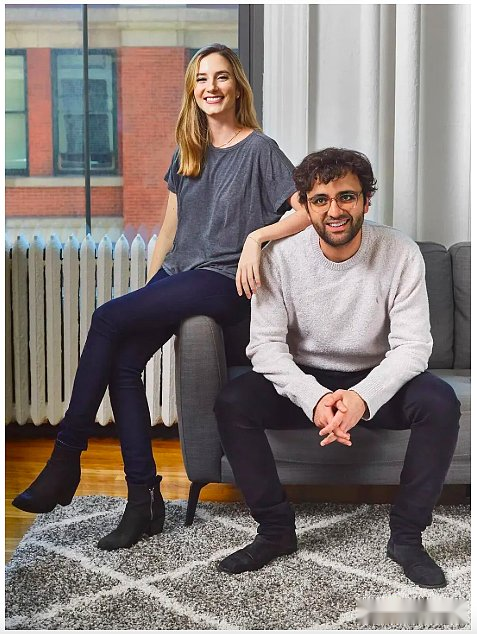
Lopes Lara, 29, just became the world’s youngest self-made female billionaire, surpassing 31-year-old ScaleAI co-founder Lucy Guo, who took the title from Taylor Swift in April.She and her other 29-year-old co-founder Tarek Mansour raised Kalshi US$1 billion with their prediction market company, with a valuation reaching US$11 billion, and both of them joined the billionaire club.The funding round announced on Tuesday was led by cryptocurrency-focused venture capital firm Paradigm, with other investors including Sequoia Capital, a16z (Andreessen Horowitz) and Y Combinator.
The company, which allows users to bet on the outcome of future events such as elections, sports and pop culture events, was valued at $5 billion after raising $300 million in October and $2 billion after raising $185 million in June.Kalshi’s valuation has soared more than fivefold in less than six months, bringing the net worth of the two young co-founders (each holding about 12% of the company) to $1.3 billion.
Mansour previously told Forbes: “We are essentially creating a whole new asset class, a whole new financial product. We have legitimized it and created the framework and industry for it.”
“After Kalshi showed such huge scale, a lot of people now want a piece of the pie,” said Ali Partovi, CEO of venture capital fund Neo, a seed round investor in Kalshi.Kalshi’s notional trading volume has grown eightfold since July, reaching $5.8 billion in November, according to the company.Its main rival Polymarket’s trading volume has more than tripled since July to $4.3 billion, while Polymarket’s valuation has soared to $9 billion, according to data from Dune Analytics.
Mansour grew up in Lebanon and later met López Lara at MIT.They belong to the same international student friend circle and take very similar elective courses, both majoring in computer science.Mansour experienced the 2007 conflict in Lebanon and taught himself English while preparing for the SAT.Lopez Lara always sat in the front row of class, he recalled.Later, Mansoor began to sit next to her in class and learn from her, and the two gradually became familiar with each other.In 2018, both of them interned at Five Rings Capital in New York, and their relationship became even closer.One night, on their way back to their internship apartment in the financial district, the two suddenly came up with the idea of starting a prediction market.“What we found is that most transactions happen when people are anticipating the future and trying to find ways to translate that into market transactions,” López Lara previously told Forbes.She added that traders and investors factor external events — such as election results or the possibility of natural disasters — into their investment decisions.
Believing there should be a way to trade the probability of an event happening directly, rather than indirectly through traditional financial markets, they applied to the startup accelerator Y Combinator and were accepted in 2019.
But the legality of prediction markets was unclear, and the two co-founders soon faced difficulties.Michael Seibel, partner emeritus at Y Combinator, recalls his early experience working with the two founders: When they realized they needed federal approval to legally operate a prediction market, they contacted more than 40 law firms for help, but none wanted to help because the founders were too young and the company was too small.
“We took a huge risk right out of college. For two years we had no product – no product launched – and if we couldn’t get regulatory approval, the company would collapse completely,” recalls López Lara.During the pandemic, she was in London, working hard to grow the business, while Mansour stayed at home in Beirut.(Mansour was in Beirut when the deadly explosion at Beirut’s port killed more than 200 people. He worked for Kalshi at night for several weeks and helped clean up the neighborhood and search for survivors during the day.)
All it took was one attorney: Jeff Bandman, who formerly worked at the Commodity Futures Trading Commission (CFTC), helped the founders complete applications for federal approval and defended them when regulators blocked them.In November 2020, Kalshi received approval from the CFTC to operate as a designated contract market (DCM), with its prediction markets classified as a type of derivative called event contracts.
This approval also sets them apart from the competitive landscape.Blockchain-based Polymarket was previously exempt from federal regulation and was fined $1.4 million by the U.S. Commodity Futures Trading Commission (CFTC) for operating an unregistered market in 2022.All of this gave Kalshi an advantage for a time.(Polymarket was approved to launch in the U.S. in September 2025. At just 27, its founder, Shayne Coplan, is one of the world’s youngest billionaires, thanks to a recent $2 billion investment from the parent company of the New York Stock Exchange.)
However, the regulatory battle does not end there.At the end of 2023, regulators rejected an election contract launched by Kalshi ahead of the 2024 U.S. presidential election on the grounds that the election contract was similar to gambling.At the time, López Lara floated the idea of suing the U.S. Commodity Futures Trading Commission (CFTC).“Every other investor in the company thought it was a terrible idea,” Partovi recalls.But they both ended up doing it.
In September 2024, a U.S. District Court judge ruled in favor of Kalshi, and the company made history by becoming the first regulated election trading platform in the United States in more than a century.”We really want to do things the right way because our vision is to build the world’s largest financial trading platform,” Lopez Lara said. “Legal compliance is our uncompromising principle.” On the eve of the election, Kalshi users bet more than $500 million on candidates and accurately predicted President Trump’s victory a month before election night.(Polymarket users have bet a total of $3.6 billion on the presidential election.)

Lopez Lara worked as a professional dancer at the Salzburg State Theater in Austria and participated in one season of “Swan Lake”.
“There’s no better training in how to face ‘no’ and persevere than being a professional ballet dancer—an injury or even a short break can mean a loss of position,” said a16z partner Alex Immerman.”López Lara learned early on to persevere with grace…and she brought this quiet confidence to the creation of Kalshi.”
Although there were initial doubts that it could maintain its growth momentum after the presidential election, Kalshi said its trading volume now exceeds $1 billion per week, with more than 90% of its volume coming from sports contracts.In January, Donald Trump Jr. joined Kalshi’s advisory board.(Trump Jr. also joined the advisory board of rival Polymarket last September.)
Kalshi has now completed integrations with brokerages such as Robinhood and Webull, and has even introduced hedge fund Susquehanna International Group to add liquidity to its market.Recently, Kalshi has established partnerships with a number of companies, including the National Hockey League (NHL) and online trading platform StockX, and has made a major push into the cryptocurrency field through integration with the blockchain platform Solana.The company said the newly acquired funds will be used to expand integrations with brokerages and establish new partnerships with news media.
However, Kalshi’s company still faces regulatory pressure from states that have filed lawsuits over Kalshi’s sports contracts, arguing that they should be regulated and taxed by state governments.But given the company’s success in overcoming regulatory hurdles that once seemed impossible, Kalshi’s investors remain confident in the founder’s ability to make progress.For Seibel, who has invested in thousands of companies during his career, this is just the beginning: “I don’t know if we’ve ever invested in a company before that has as much potential impact on the world as Kalshi.”