 jakiro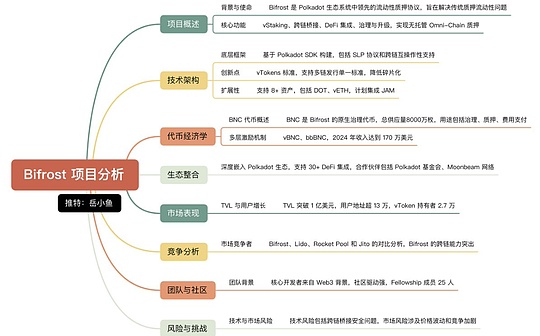
Author: Yue Xiaoyu; Source: X, yuexiaoyu111
Polkadot 2.0 is finally online.But few in the community seem to be paying attention.
In this cycle, the Ethereum ecosystem is still struggling, Solana is playing a meme currency carnival, BNB is backed by various hot spots on the Binance exchange, and Polkadot seems to be forgotten in the corner of the old era.
Is there really no one paying attention to the Polkadot ecosystem?
Polkadot is the epitome of the era of public chain wars. Behind it is the path of the blockchain industry. It is still worth taking a look at what is happening in this ecosystem..
On November 6, 2025, Polkadot 2.0 was officially launched, and its performance has been greatly improved.At the same time, AssetHub completed the asset migration of US$4.5 billion, setting the largest on-chain operation in the history of Polkadot.
On the other hand, the inflation rate dropped to 7.78% and locked on the downward path, and the 2.1 billion DOT hard cap proposal entered the final vote.
This is not just an old tree blooming with new flowers, but more like a system reboot..
Therefore, Polkadot is not unattended, it just shifted from the traffic narrative to the infrastructure narrative.
You can take a look at this upgrade in detail:
1. What is Polkadot 2.0?
The core of Polkadot 2.0 lies in the troika:
Asynchronous Backing, Agile Coretime and Elastic Scaling.
This change directly improves the throughput and interoperability of parachains.
Performance optimization is the first goal.
Secondly, Polkadot’s inflation rate reform further strengthens the scarcity of DOT.
Back in February 2025, the inflation rate had been reduced from 10% to 7.78% to increase investor appeal.
The community proposal goes further, planning to suppress the inflation rate to 3%-6% by 2026 and introduce a hard cap of 2.1 billion DOT.
AssetHub migration is the recent focus: on November 4, more than 1.6 billion DOT (worth approximately US$4.5 billion) was migrated from the relay chain to AssetHub, one of the most complex upgrades of Polkadot.
2. Who is the most noteworthy ecological application after the Polkadot upgrade?
First, we can find that Polkadot’s upgrade directly stimulates staking demand.
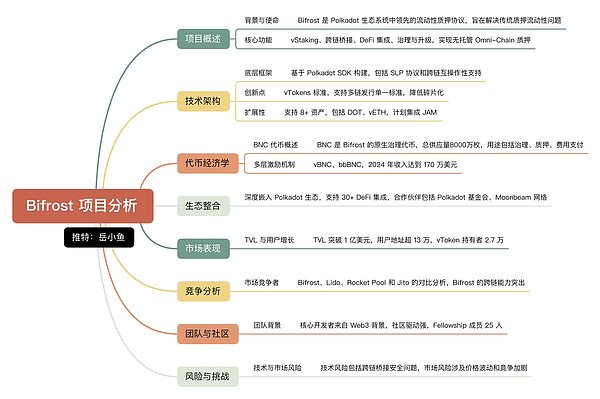
Bifrost is the exclusive liquidity staking application chain of the Polkadot ecosystem.
As a non-custodial liquid staking solution, Bifrost captures this dividend and allows users to enjoy higher net returns without sacrificing liquidity..
Users who pledge native assets (such as DOT) can obtain vTokens (such as vDOT) at a ratio of 1:1. These vTokens automatically carry rewards and can circulate freely in the DeFi ecosystem.
The biggest feature of vToken is that it can be minted in different chains. For example, the ASTR token can be minted in Astar (parallel chain) and Soneium.
vETH 3.0, which will be launched next month, supports minting directly on the Ethereum mainnet and Layer 2.Lido only supports casting on the Ethereum mainnet, and then cross-chains to Layer 2.
Unlike traditional staking, Bifrost’s unmanaged Omni-Chain design retains user control and supports 10+ chains, including Ethereum’s heterogeneous integration.
Therefore, Bifrost’s business has expanded from the single Polkadot/Kusama ecosystem to revenue layer infrastructure.
3. Bifrost’s growth flywheel
Bifrost’s Tokenomics 2.0 is a very important highlight:
On November 1, the bbBNC (Buy Back BNC) mechanism was officially launched, using 100% of the protocol profits to buy back BNC tokens, 90% of which are distributed to bbBNC holders.
To put it simply, you lock BNC for 3 months (minimum 50 vBNC), and all the money Bifrost earns → is used to buy back BNC, and then 90% is distributed to you.
This marks the transformation of project tokens from governance voting to profit sharing. bbBNC has a minimum lock of 50 vBNC (starting from 3 months) and an annualized rate of return of up to 43%.
This becomes a repurchase flywheel: protocol income → automatically repurchase BNC → burn or distribute dividends → increase BNC scarcity → attract more pledges.
The reduction in Polkadot’s inflation further amplifies this mechanism: the scarcity of DOT increases, which promotes staking TVL, thereby increasing Bifrost’s fee sharing, forming a positive feedback loop.
Lower DOT inflation will actually affect staking returns because APY will decrease, but it will also bring more opportunities to DeFi and attract more DOT holders to choose Bifrost for staking, because there are more DeFi scenarios to amplify returns.
Compared with restaking protocols such as EigenLayer, bbBNC’s decentralized dividends are more sustainable.
4. Summarize
Can the hubby chain ecology be revived?As long as you keep doing things, there will always be opportunities.
After Polkadot upgrades, new opportunities are emerging. This is a window period for value revaluation..
From Polkadot’s current perspective, Bifrost is the one that can directly capture value in this upgrade.
We can continue to pay attention to the ecology of these old public chains.