
 jakiro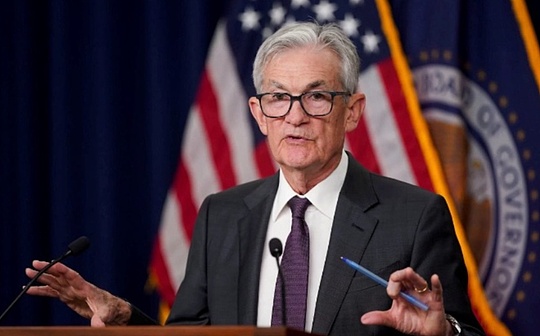
Organized: Bitcoin Vision
On Tuesday, local time in the United States, Federal Reserve Chairman Powell attended the National Association of Business Economics (NABE) annual meeting in Philadelphia, Pennsylvania, and delivered an important speech on the current economic situation and future policy expectations.
Powell said,Fed may end balance sheet reduction in coming months.The future direction of monetary policy will be driven by data and risk assessment. The balance sheet remains an important monetary policy tool. Stopping balance sheet expansion early may have had a smaller impact.Rising job market risks justify September rate cut.Labor market expectations remain on a downward trend.Powell said everyone is looking at the same unofficial employment data, and state-level jobless claims are a good data point.He thinks,If the shutdown continues and October data is delayed, the Fed will start missing data and the situation will become more complicated.
Powell added that even without new Bureau of Labor Statistics data, which has been delayed by the government shutdown, privately produced job market indicators and internal Fed research provide enough reason to suggest the job market is cooling.”Available evidence” suggests that “layoffs and hiring remain low” while “households’ perceptions of job opportunities and businesses’ perceptions of hiring difficulties continue to trend downwards”.
Powell also said,Despite the lack of latest data due to the ongoing government shutdown, the U.S. economy appears to be on a stable footing.On economic issues, Powell reiterated a theme from recent remarks, saying that “in the tension between employment and inflation targets, no policy path is risk-free.”
“Fed Speaker” Nick Timiraos commented that Fed Chairman Powell’s speech on the balance sheet did several things: 1) Given the recent signs of strength in overnight lending rates, the speech provided a mark-to-market assessment of the current prospects for quantitative tightening; 2) It rebutted recent criticism (such as U.S. Treasury Secretary Bessant and others) that the support measures during the epidemic – then implemented with broad support from Congress and the early days of the Trump administration – were absurd policy interventions.Powell acknowledged (as he has acknowledged before) that it would have looked smarter to stop QE sooner, but given that the Fed was changing course so quickly and dramatically in 2022, the move would have no material macroeconomic impact.3) It also defended efforts by populist senators from both parties to try to strip the Fed of its ability to pay the interest rate on excess reserves (IOR), warning that revoking this policy tool could cause greater damage to markets.
Peter Cardillo, chief market economist at Spartan Capital Securities, said he doesn’t think Powell has changed his tune.On the one hand, he said the economic fundamentals were solid, but he also pointed to weaknesses.What he is doing is preparing the market for a series of rate cuts, but not necessarily in sequence..Peter Cardillo believes,Powell’s words revealed that he will cut interest rates by 25 basis points at the end of this month, and then the Fed will assess the situation.If the labor market continues to weaken, leading to fewer jobs, then he may prepare for a sharp 50 basis point rate cut in December..Powell is preparing the market for a rate cut, but at the same time he doesn’t want the market to think a rate cut is inevitable.He is using labor market weakness as a hedge.
The following is the full text of Powell’s speech:
Thank you, Emily.I would also like to thank the National Association for Business Economics (NABE) for awarding me the Adam Smith Award.It is an honor to join previous recipients such as my predecessors Janet Yellen and Ben Bernanke as recipients of this honor.Thank you for your recognition and thank you for giving me this opportunity to communicate with you today.
Monetary policy can be more effective when the public understands what the Fed does and why it operates.With this in mind, I hope to increase your understanding of one of the more obscure and technical aspects of monetary policy: the Federal Reserve’s balance sheet.A colleague recently compared this topic to going to the dentist, but that comparison may be unfair to dentists.
Today, I’ll discuss the important role our balance sheet has played during the pandemic and some of the lessons learned.I will then review our implementation framework for adequacy of reserves and the progress we have made toward normalizing the size of our balance sheet.Finally, I will briefly touch on the economic outlook.
Federal Reserve Balance Sheet Background
One of the primary responsibilities of a central bank is to provide the monetary base for the financial system and the broader economy.This basis is formed by central bank liabilities.As of October 8, the total liabilities on the Fed’s balance sheet were $6.5 trillion, with three categories accounting for approximately 95% of the total.First, there is a total of $2.4 trillion in Federal Reserve Notes (that is, physical currency).Second, reserves (money depository institutions hold in banks at the Fed) total $3 trillion.These deposits enable commercial banks to make and receive payments and meet regulatory requirements.Reserves are the safest and most liquid assets in the financial system, and only the Federal Reserve can create them.An adequate supply of reserves is critical to safeguarding the safety and soundness of our banking system, the resilience and efficiency of our payments system, and ultimately the stability of our economy.
The third is the Treasury General Account (TGA), currently about $800 billion, which is essentially the federal government’s checking account.When the Treasury makes or receives payments, these financial flows affect the supply of reserves or other liabilities in the system.
The assets of our balance sheet consist almost entirely of securities, including $4.2 trillion in U.S. Treasury securities and $2.1 trillion in government-backed agency mortgage-backed securities (MBS).When we add reserves to the system, we typically do so by purchasing Treasury securities on the open market and depositing them into reserve accounts at the banks that trade with the sellers.This process effectively converts securities held by the public into reserves but does not change the total amount of government debt held by the public.
The balance sheet is an important tool
The Fed’s balance sheet is a critical policy tool, especially as policy rates are constrained by the effective lower bound (ELB).When the COVID-19 epidemic broke out in March 2020, the economy almost came to a standstill, financial markets were paralyzed, and a public health crisis could turn into a severe and prolonged economic recession.
In response, we established a series of emergency liquidity facilities.These projects have the support of Congress and the Administration, providing critical support to markets and playing a significant role in restoring confidence and stability.At its peak in July 2020, total loans from these instruments totaled just over $200 billion.As the situation stabilized, most of these loans were quickly recovered.
At the same time, the U.S. Treasury market—normally the world’s deepest and most liquid market and the cornerstone of the global financial system—is coming under intense stress and on the verge of collapse.We are restoring normal functioning in the Treasury market through large-scale purchases of securities.Faced with unprecedented market failure, the Federal Reserve purchased Treasury and agency bonds at an alarming rate in March and April 2020.These purchases supported the flow of credit to households and businesses and created easier financial conditions to support the economic recovery.This policy easing is important because we have lowered the federal funds rate to near zero and expect it to remain there for some time.
By June 2020, we slowed the pace of bond purchases but remained at $120 billion per month.In December 2020, given that the economic outlook remained highly uncertain, the FOMC stated that it expected to maintain this pace of purchases “until the Committee has made further substantial progress toward achieving its maximum employment and price stability objectives.”The guidance signals that the Fed will not withdraw support prematurely at a time when the economic recovery remains fragile and faces unprecedented conditions.
We maintain the pace of asset purchases until October 2021.By then, it had become clear that high inflation was unlikely to subside without a strong monetary policy response.At the November 2021 meeting, we announced a gradual reduction in asset purchases.At the December meeting, we doubled the pace of the taper and said asset purchases would end in mid-March 2022.Over the entire period of bond purchases, our securities holdings increased by $4.6 trillion.
Some observers have raised legitimate questions about the scale and composition of asset purchases during the pandemic recovery.In 2020 and 2021, the economy continues to face major challenges due to the successive outbreaks of the new coronavirus epidemic, causing widespread chaos and losses.During that tumultuous period, we continued asset purchases to avoid a sharp and unpleasant tightening of financial conditions while the economy remained highly fragile.Our thinking has been influenced by recent events in which signals of balance sheet reduction triggered a significant tightening of financial conditions.We think of December 2018, and the “taper tantrum” of 2013.
Regarding the composition of our asset purchases, some question why we are purchasing agency mortgage-backed securities (MBS) when the housing market is strong during the pandemic recovery.In addition to purchases specifically targeted at market operations, the primary purpose of MBS purchases, like our Treasury purchases, is to alleviate broader financial conditions when policy rates are capped at the ELB.The extent of the impact of these MBS purchases on housing market conditions during this period is difficult to determine.Many factors influence the mortgage market, and many factors outside of the mortgage market also influence supply and demand in the broader real estate market.
In hindsight, we could have—and perhaps should have—stopped asset purchases earlier.Our real-time decisions at that time were designed to protect against downside risk.We knew that once we stopped buying, we could reduce the size of our balance sheet relatively quickly, and that’s exactly what happened.Research and experience show that asset purchases affect the economy through expectations of future balance sheet size and maturity.When we announced the tapering of QE, market participants began to price in the impact, tightening financial conditions ahead of schedule.An earlier stop might bring about some changes, but is unlikely to fundamentally change the trajectory of the economy.Nonetheless, our experience since 2020 does suggest that we can use our balance sheet more flexibly and with greater confidence as market participants become more familiar with the use of these tools and our communications are able to help them build reasonable expectations.
Some also believe we could have made the purpose of asset purchases clearer.There is always room for improvement in communication.But I think our statement was pretty clear about our goal, which is to support and maintain the smooth functioning of markets and to help create accommodative financial conditions.Over time, the relative importance of these goals changes as economic conditions change.But these goals never conflicted, so the issue didn’t seem to make much difference at the time.Of course, this isn’t always the case.For example, banking sector stress in March 2023 resulted in a significant increase in our balance sheet through lending operations.We clearly distinguish these financial stability operations from our monetary policy stance.In fact, we continued to raise policy rates during that period.
Adequate reserve system works well
Turning to my second topic, our adequate reserve system has proven highly effective in keeping our policy rates in check through a variety of challenging economic conditions, while promoting financial stability and supporting a robust payments system.
Within this framework, adequate reserve supply ensures sufficient liquidity in the banking system, while control of policy rates is achieved by setting our regulatory interest rates (reserve balance interest rate and overnight reverse repurchase rate).This approach allows us to maintain interest rate control regardless of the size of our balance sheet.This is critical given the highly volatile and difficult-to-predict private sector liquidity needs, as well as significant fluctuations in autonomous factors affecting reserve supply, such as the Treasury General Account.
This framework has proven resilient whether balance sheets shrink or expand.Since June 2022, we have reduced the size of our balance sheet by $2.2 trillion, from 35% of GDP to just under 22%, while maintaining effective interest rate controls.
Our long-standing plan is to halt the balance sheet reduction when reserves are slightly above the level we believe is consistent with adequate reserve conditions.We may be closer to this point in the coming months, and we are closely monitoring various indicators to make this determination.Some signs are starting to emerge that liquidity conditions are gradually tightening, including a general strengthening of repo rates and more pronounced but temporary funding pressures on specific dates.The committee’s plan indicates that they will take cautious steps to avoid the kind of currency market tensions seen in September 2019.In addition, the tools in our implementation framework, including the Standing Repurchase Facility and the Discount Window, will help control funding pressures and keep the federal funds rate within the target range during the transition to lower reserve levels.
Normalizing the size of the balance sheet does not mean a return to pre-pandemic levels.Over the long term, the size of our balance sheet will depend on public demand for our liabilities rather than pandemic-related asset purchases.Currently, non-reserve liabilities are approximately $1.1 trillion higher than before the pandemic, requiring a corresponding increase in our securities holdings.Demand for reserves has also risen, partly reflecting growth in the banking system and the overall economy.
With respect to the composition of our securities portfolio, our current portfolio’s allocation to long-term securities is overweight and short-term securities are overweighted relative to outstanding Treasury securities.Long-term security allocations will be discussed by the committee.We will transition to our desired portfolio gradually and predictably to allow market participants time to adjust and to minimize the risk of market volatility.Consistent with our long-standing guidance, we aim for the portfolio to consist primarily of Treasury bonds over the long term.
Some question whether the interest we pay on reserves will impose a significant burden on taxpayers.This is not the case.The Fed’s interest income comes from U.S. Treasury securities that back up reserves.For the most part, the interest income we earn from our Treasury holdings is enough to pay interest on reserves, thereby generating huge remittances to the Treasury.By law, after we pay our fees, all profits are due to the Treasury.Since 2008, even accounting for recent negative net income, our total contributions to the Treasury have exceeded $900 billion.While our net interest income was temporarily negative due to rapid increases in policy rates to control inflation, this occurrence is extremely rare.Our net income will turn positive soon, as has typically been the case historically.Of course, negative net income does not affect our ability to conduct monetary policy or meet our financial obligations.
If we cannot pay interest on reserves and other liabilities, the Fed will lose control of interest rates.The stance of monetary policy will no longer adjust appropriately to economic conditions and will move the economy away from our employment and price stability objectives.In order to restore interest rate control, significant sales of securities will be required in the short term to shrink our balance sheet and the amount of reserves in the system.The volume and pace of these sales could put pressure on Treasury market operations and threaten financial stability.Market participants will need to absorb the sales of Treasuries and agency MBS, which will put upward pressure on the entire yield curve, raising borrowing costs for the Treasury Department and the private sector.Even through this volatile and disruptive process, the banking system will remain less resilient and more vulnerable to liquidity shocks.
Most importantly, our adequate reserve system has proven highly effective in conducting monetary policy and supporting economic and financial stability.
Current Economic Situation and Monetary Policy Outlook
Finally, I will briefly touch on current economic conditions and the outlook for monetary policy.While the release of some important government data has been delayed due to the government shutdown, we regularly review a variety of public and private sector data that remain available.We have also developed a national network of contacts through the Reserve Banks who have provided valuable insights, which will be summarized in tomorrow’s Beige Book.
Based on the data we have so far, it can be said that the outlook for employment and inflation does not appear to have changed much since the September meeting four weeks ago.However, data available before the shutdown suggested that growth in economic activity may be more solid than expected.
Although the unemployment rate remained low in August, employment growth has slowed sharply, possibly due in part to slower labor force growth due to lower immigration and lower labor force participation.In this less dynamic and slightly weaker labor market, downside risks to employment appear to have increased.Although September’s official employment data has been delayed, available evidence shows that layoffs and hiring activities have remained low, and households’ perception of job opportunities and companies’ perception of recruitment difficulty continue to show downward trends.
Meanwhile, 12-month core personal consumption expenditures (PCE) inflation was 2.9% in August, slightly higher than earlier in the year, as core goods inflation rose faster than continued tightening in housing services prices.Available data and surveys continue to suggest that rising commodity prices largely reflect the impact of tariffs rather than broader inflationary pressures.Consistent with these effects, short-term inflation expectations have generally risen this year, while most measures of longer-term inflation expectations remain consistent with our 2% objective.
Rising downside risks to employment change our assessment of the balance of risks.Therefore, we believe a more neutral policy stance at the September meeting is appropriate.As we strive to balance the tension between employment and inflation targets, there is no risk-free policy path.This challenge was evident in the differences in forecasts among committee members at the September meeting.I would like to emphasize again that these predictions should be understood as a series of potential outcomes, the probability of which changes as new information becomes available, thus affecting how we make decisions in each meeting.We will shape policy based on the evolution of the economic outlook and the balance of risks, rather than following a predetermined path.
Thank you again for this award and thank you for inviting me to share it with you today.I look forward to communicating with you.